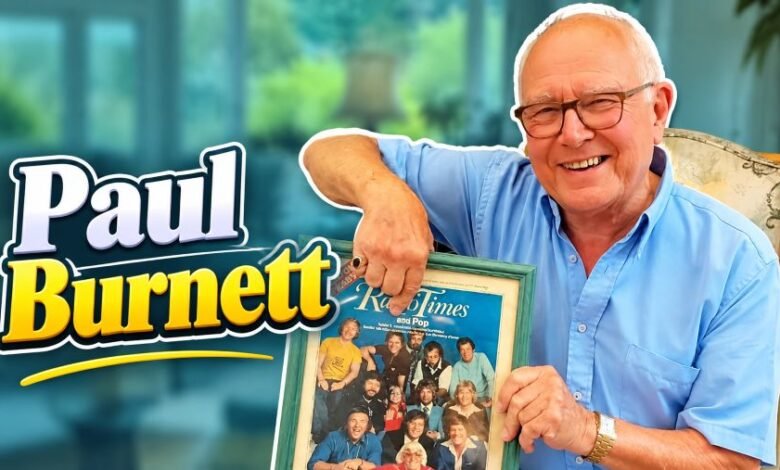
Paul Burnett: The Radio DJ Who Became a Familiar Voice Across Britain
From his childhood in Manchester to BBC Radio 1, Radio Luxembourg and his broadcasting work in 2026, here is the story of Paul Burnett's life and career.

Introduction
Paul Burnett is a British radio presenter who became famous through BBC Radio 1 and Radio Luxembourg. His voice reached millions of music fans. For many listeners, he was a familiar part of their daily routine.
His career started in the 1960s. Since then, he has worked for several major radio stations, presented television programmes and even enjoyed success in the UK music charts.
And he hasn’t completely left radio behind.
In 2026, Burnett joined 80’s Heaven, an online radio station playing music from the 1980s. It was another chapter in a broadcasting career spanning more than six decades.
Paul Burnett Quick Facts
| Detail | Information |
|---|---|
| Full Name | Paul Burnett |
| Date of Birth | 26 November 1943 |
| Age | 82 years old (October 2026) |
| Birthplace | Hulme, Manchester, England |
| Nationality | British |
| Profession | Radio DJ and Broadcaster |
| Famous For | BBC Radio 1 and Radio Luxembourg |
| Broadcasting Career Started | 1964 |
| Early Radio Station | Radio 270 |
| Major BBC Station | BBC Radio 1 |
| Television Work | Top of the Pops, Seaside Special, Miss World |
| Known Music Release | Convoy G.B. (1976) |
| Latest Radio Station | 80’s Heaven (2026) |
Early Life and Childhood
Paul Burnett was born on 26 November 1943 in Hulme, Manchester, England.
Music was already part of his home.
His father worked as a pianist. His mother was a singer. Both were involved in theatrical entertainment, which meant the family often travelled for performances.
Life was rarely settled.
Burnett spent parts of his childhood travelling around Britain. His family sometimes stayed in caravans, and he attended around 12 different schools.
Changing schools so often wasn’t easy. Yet growing up around performers gave him early experience of life in entertainment.
In a 1972 interview, Burnett spoke about his parents’ work and the family’s unusual lifestyle. He also explained that his parents eventually separated.
His childhood was certainly different from the usual story of someone who grew up in one town and attended the same school for years.
Education and School Years
Burnett’s education took place across several schools in Britain.
His parents’ work required frequent travel. So he often had to adjust to new classrooms, teachers and surroundings.
He reportedly attended approximately 12 schools.
That is a lot of change for any child.
His early experiences were shaped by family entertainment work and frequent moves. Public biographical records provide more detail about those experiences than about his academic qualifications.
How His Broadcasting Career Started
Burnett didn’t begin his professional life at the BBC.
His first experience with radio came during his service in the Royal Air Force.
In 1964, while serving in the Persian Gulf region, he began broadcasting through a forces radio service in Aden.
It was an early chance to work behind a microphone.
He learned how to present programmes, speak to listeners and handle the practical side of broadcasting.
Those experiences helped him move towards a career in commercial radio.
After military service, he also worked as a nightclub disc jockey in northern England.
But he wanted more.
Professional radio was growing, and Burnett soon found an opportunity that would change his working life.
His First Professional Radio Job
In 1966, Burnett joined Radio 270.
It was an offshore radio station broadcasting from a ship off the Yorkshire coast, near Scarborough.
Pirate radio was popular in Britain during the 1960s. These stations played records that many young listeners wanted to hear more often.
Radio 270 gave Burnett the chance to reach a larger audience.
He presented music programmes and built his professional broadcasting experience.
The offshore radio industry later faced major legal restrictions. In 1967, Burnett moved to Manx Radio on the Isle of Man.
His time there was brief.
A bigger opportunity soon followed.
The Radio Luxembourg Years
Radio Luxembourg became one of the biggest names in Paul Burnett’s career.
He joined the station in 1967.
Known to listeners as Radio Luxembourg 208, the station was especially popular with British audiences who wanted to hear pop music during the evening.
Burnett presented its Saturday Top 20 programme.
The show introduced listeners to popular records and gave them a regular chart rundown.
His connection with the station continued until 1974.
During those years, he built a strong reputation as a music presenter. His work on chart programmes also prepared him for what came next.
BBC Radio 1 was waiting.
Joining BBC Radio 1 in 1974
Burnett joined BBC Radio 1 on 24 March 1974.
This became one of the defining stages of his career.
He initially presented All There Is to Hear, a programme connected with records receiving radio airplay.
He also covered the station’s national Top 20 chart programme.
BBC Radio 1 was already a major destination for British pop music fans. Working there introduced Burnett to a wider national audience.
His relaxed presenting style worked well with the station’s format.
He knew the records. He understood radio.
And he could keep a programme moving without making everything sound too serious.
Becoming a Popular Lunchtime DJ
Burnett became especially well known through his BBC Radio 1 lunchtime programme.
From July 1976, he presented a regular weekday show that mixed popular songs with listener entertainment.
It wasn’t simply a record-playing programme.
There was humour, conversation and a sense that the presenter was talking directly to people listening at home or work.
One of his best-known responsibilities was announcing the new UK singles chart on Tuesday lunchtimes.
For music fans, this was a big moment.
Listeners wanted to discover which records were climbing, which songs were falling and who had reached number one.
Burnett delivered those updates as part of his regular Radio 1 work.
His programmes also featured segments such as Fun at One, Pub of the Day and Is, Was, Should Have.
These features helped give the show its own identity.
Television Appearances
Burnett’s career wasn’t limited to radio.
He also appeared on British television.
One of his most recognised television roles was presenting Top of the Pops, the BBC music programme that featured popular artists and chart records.
Appearing on the show allowed listeners to put a face to the voice they already knew.
His television work also included Seaside Special and a presenting role connected with Miss World.
These appearances reflected his position as an established broadcaster during the 1970s and early 1980s.
Still, radio remained his main professional home.
A Surprise UK Chart Hit
Here is an interesting part of Burnett’s story.
He wasn’t only announcing records on the radio. He also helped make one.
In 1976, Burnett worked with fellow DJ Dave Lee Travis on the novelty single Convoy G.B.
The recording was released under the name Laurie Lingo & The Dipsticks.
It was a humorous British take on C. W. McCall’s song Convoy.
The track became a commercial success.
According to the Official Charts Company, Convoy G.B. reached number four on the UK Singles Chart in May 1976.
It remained on the chart for seven weeks.
That was an impressive result for a comedy recording made by radio personalities.
It also gave Burnett an unusual place in British chart history.
He had spent years announcing hit records. Now he was associated with one himself.
Life After BBC Radio 1
Burnett eventually moved away from his regular Radio 1 role.
But his broadcasting career continued.
He worked with BBC Radio 2 and several commercial radio stations, including Capital Gold and Classic Gold.
These stations gave him opportunities to present music from different decades.
His experience with chart programmes remained useful.
Burnett also presented a weekly Top 20 programme on the BBC World Service during the 1980s.
That meant his voice could reach audiences beyond Britain.
For someone who had started broadcasting during military service, it was quite a journey.
Working With Capital Gold
Capital Gold was another important station in Burnett’s later career.
The station became known for playing older popular records and employing presenters with long broadcasting histories.
Burnett was among its original presenters.
His background at Radio Luxembourg and BBC Radio 1 made him a natural fit for programmes built around familiar music.
He could introduce old records with the knowledge of someone who had worked in radio when many of those songs first became hits.
That experience gave his programmes a personal touch.
Wife and Personal Life
Burnett has generally kept his personal life separate from his broadcasting work.
Historical newspaper and magazine reports identify his wife as Nicole.
A report published in 1970 described their marriage. A later profile from 1979 also mentioned Nicole and described her earlier work as an air stewardess.
According to that account, they met during a flight to Miami.
These reports provide some insight into his personal life during his earlier career.
However, they do not establish his present marital status.
Much of Burnett’s public story remains connected with his professional achievements rather than his family relationships.
Returning to Radio in 2026
Burnett’s long career has continued into the 2020s.
In March 2026, RadioToday reported that he was joining 80’s Heaven, an online station dedicated to music from the 1980s.
His first programme was scheduled for 4 April 2026.
The station announced two weekly shows, with repeat broadcasts and listen-again access.
This was a fitting move.
Burnett had already been a familiar radio voice during the 1980s. He had presented programmes on Radio 1 and the BBC World Service throughout that period.
Now he could return to music from the same decade.
As of October 2026, the official 80’s Heaven website continued to list him among its presenters.
For longtime listeners, hearing him again offers a connection with an earlier period of British radio.
What Makes His Broadcasting Career Special?
Radio has changed a lot since the 1960s.
When Burnett started, offshore broadcasting was an important part of British pop culture. Radio Luxembourg attracted huge audiences, and chart programmes helped listeners follow the latest music.
Then came major changes in British commercial radio.
Burnett worked through many of them.
He began with forces broadcasting, moved into offshore radio, joined Radio Luxembourg and became a BBC Radio 1 presenter.
Later, he worked with established commercial stations and specialist music services.
His career provides a clear example of how British radio developed across several generations.
Some listeners remember him for chart announcements. Others know him from Radio Luxembourg or classic hits programmes.
Either way, he spent much of his working life speaking to music fans.
Career Highlights
Several moments stand out in Burnett’s broadcasting history.
- 1964: Began broadcasting during RAF service.
- 1966: Joined offshore station Radio 270.
- 1967: Worked at Manx Radio and joined Radio Luxembourg.
- 1974: Joined BBC Radio 1.
- 1976: Became closely associated with the Radio 1 lunchtime show.
- 1976: Reached number four in the UK chart with Convoy G.B.
- 1980s: Presented the weekly Top 20 on BBC World Service.
- Later career: Worked for BBC Radio 2, Capital Gold and other stations.
- 2026: Joined 80’s Heaven Radio.
Together, these milestones show the length and variety of his professional life.
Where Is He Now?
As of October 2026, Burnett is 82 years old.
He remains associated with 80’s Heaven Radio, where his programmes feature music from the 1980s.
His broadcasting history also includes Boom Radio, a station associated with experienced British presenters.
Although his career began more than 60 years ago, his name remains familiar to people who followed British radio during the 1970s and 1980s.
His ongoing radio appearances are a reminder that a good broadcaster can remain connected with listeners for many years.
Final Thought
Paul Burnett built his career one broadcast at a time.
From offshore radio ships to the BBC studios, his professional life followed some of the biggest changes in British music broadcasting.
His Radio 1 years made him widely known. Radio Luxembourg gave him an early national audience. Later stations allowed him to keep doing the work he knew best.
And in 2026, he was still on the air.
For longtime British radio fans, Burnett remains a familiar voice from decades of popular music.
Frequently Asked Questions
1. Who is Paul Burnett?
Paul Burnett is a British radio DJ known for BBC Radio 1, Radio Luxembourg and several commercial music stations.
2. How old is Paul Burnett?
He is 82 years old as of October 2026. He was born on 26 November 1943.
3. Where was Paul Burnett born?
He was born in Hulme, Manchester, England.
4. When did he join BBC Radio 1?
He joined BBC Radio 1 on 24 March 1974.
5. What was his first professional radio station?
He joined offshore station Radio 270 in 1966 after gaining broadcasting experience during RAF service.
6. Did he present Top of the Pops?
Yes. He appeared as a presenter on the BBC television music programme Top of the Pops.
7. Did Paul Burnett have a hit song?
Yes. He recorded Convoy G.B. with Dave Lee Travis under the name Laurie Lingo & The Dipsticks. It reached number four in the UK in 1976.
8. Is Paul Burnett still working?
As of October 2026, he is listed as a presenter on 80’s Heaven Radio.