Chief Technical Examiner: Role, Responsibilities, Qualifications and Career
Learn what a Chief Technical Examiner does, how technical inspections work, and why this senior position matters in government projects and public procurement.

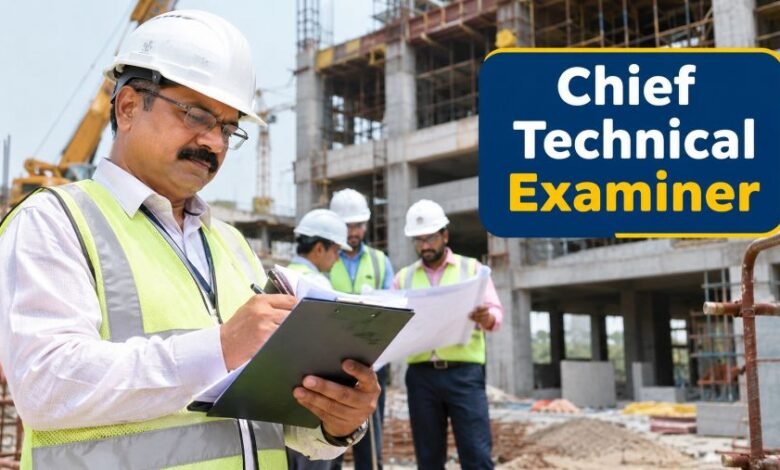
Introduction
A government project may look perfect on paper. The budget is approved, contractors are selected, and construction begins. But who checks whether the materials meet the required standards or whether public money is being spent properly?
That is where a Chief Technical Examiner (CTE) comes in.
A Chief Technical Examiner is a senior technical officer who helps examine government projects, procurement contracts, engineering work, and related technical matters.
In India, the position is particularly associated with the Central Vigilance Commission (CVC) and technical inspection departments in state governments.
The job involves more than checking construction quality. It also requires reviewing records, examining contracts, identifying irregularities, and helping government authorities make informed decisions.
Quick Facts About Chief Technical Examiner
| Detail | Information |
|---|---|
| Job title | Chief Technical Examiner |
| Short form | CTE |
| Main field | Technical inspection and public procurement |
| Primary responsibility | Reviewing technical work, contracts, and compliance |
| Major Indian institution | Central Vigilance Commission (CVC) |
| Related organisation | Chief Technical Examiners’ Organisation (CTEO) |
| Common professional background | Senior engineering and procurement experience |
| Key skills | Engineering knowledge, inspection, auditing, and reporting |
| Appointment method | Often deputation for senior government posts |
| Main objective | Technical accountability and responsible use of public funds |
What Is a Chief Technical Examiner?
A Chief Technical Examiner is a senior professional responsible for examining technical aspects of projects and contracts.
The exact duties depend on the government department, institution, and appointment rules.
In India’s Central Vigilance Commission, Chief Technical Examiners supervise or carry out intensive examinations of public procurement and other contractual activities.
Their work helps identify problems such as poor workmanship, unsupported payments, deviations from approved specifications, and procurement irregularities.
For example, imagine a government department awards a contract to build a hospital.
The technical examination may cover the approved design, contract terms, materials, quantities, work quality, and payments.
The examiner’s findings can help the responsible authorities determine whether the work meets the required conditions.
Chief Technical Examiner in India
The Chief Technical Examiner position has an established place in India’s public administration.
The Chief Technical Examiners’ Organisation was formed in 1957 to support technical examination of public works.
It later came under the administrative control of the Central Vigilance Commission.
The organisation examines technical and contractual matters involving central government departments and other organisations within its jurisdiction.
Its work is not limited to roads and buildings. Depending on the assignment, examinations may also involve equipment purchases, mechanical and electrical contracts, services, and other procurement activities.
State governments may operate their own inspection systems.
For example, Kerala’s Finance (Inspection-Technical) Department carries out technical inspections and provides advice concerning public works and government approvals.
This means the responsibilities of a Chief Technical Examiner can vary between central and state government organisations.
Main Responsibilities of a Chief Technical Examiner
1. Inspecting Government Projects
Technical inspection is one of the most recognisable parts of the role.
The examiner or assigned technical team may inspect construction sites, public buildings, infrastructure projects, and other government works.
They examine whether the work follows approved drawings, specifications, and contractual conditions.
A site visit may reveal issues that are not obvious from office records.
2. Reviewing Tender Documents and Contracts
Public contracts contain detailed conditions about price, quality, delivery, completion, and payment.
A Chief Technical Examiner may review these documents to identify technical or contractual concerns.
The examination can involve checking whether the procurement process followed applicable rules and whether decisions were properly documented.
3. Checking Construction Quality
Good construction depends on materials, workmanship, supervision, and proper testing.
Technical examiners assess available evidence concerning these matters.
For example, a review could involve concrete test records, material certificates, measurement books, and site observations.
The purpose is to identify differences between the required standard and the work actually completed.
4. Examining Financial and Technical Records
A technical examination may involve comparing recorded quantities with actual work.
Contract bills, measurement records, cost estimates, and supporting documents can all be relevant.
Unexplained differences may require further examination.
The examiner documents observations so the responsible department can review them.
5. Investigating Technical Complaints
Some examinations begin because a complaint raises concerns about a project.
The technical team may inspect the relevant work, examine documents, and assess whether the available evidence supports the complaint.
A complaint alone does not establish wrongdoing.
Findings must be based on records, technical standards, and the applicable examination procedure.
6. Providing Technical Advice
Government authorities sometimes need expert advice on complex procurement or engineering issues.
Chief Technical Examiners can provide technical observations and recommendations within their assigned jurisdiction.
This helps authorities assess contracts, resolve technical questions, and improve their internal procedures.
How Does a Chief Technical Examiner Conduct an Inspection?
Although procedures vary, a technical examination commonly follows several stages.
Stage 1: Selection of work
The department identifies a project, procurement contract, or technical issue for examination.
Stage 2: Collection of records
The examining team requests relevant documents, including agreements, estimates, approvals, drawings, and payment records.
Stage 3: Technical review
Records are examined for compliance with contractual conditions and applicable requirements.
Stage 4: Site inspection
Where necessary, engineers visit the project site to inspect work and verify measurements or materials.
Stage 5: Reporting
The examining team records its observations in an inspection or intensive examination report.
Stage 6: Departmental response
The concerned organisation may be asked to provide explanations, records, or evidence of corrective action.
Stage 7: Follow-up
The findings are considered under the applicable vigilance and administrative procedures.
An examiner’s observation does not automatically prove corruption. Responsibility and any resulting action must be determined through the appropriate process.
Qualifications Required to Become a Chief Technical Examiner
There is no single qualification rule that applies to every organisation using this title.
Government recruitment notices set the actual eligibility conditions.
For the Central Vigilance Commission’s Chief Technical Examiner (Store Procurement and Inventory Control) post advertised in December 2025, the requirements included an engineering degree from a recognised institution and relevant professional experience.
The eligible service categories included certain senior officers holding Chief Engineer, Superintending Engineer, or equivalent positions, subject to the specified conditions.
The Government of Kerala issued a separate notification in September 2026 for a Chief Technical Examiner (Civil) position.
That notice required a Civil Engineering degree with at least 60% marks, a minimum of 20 years of post-qualification professional experience, and the specified senior engineering service background.
These are examples of official eligibility requirements, not universal rules for every Chief Technical Examiner position.
Skills Needed for the Position
Technical knowledge is only one part of the job.
A senior examiner must also understand how government projects are approved, contracted, supervised, and reviewed.
Important professional skills include:
- Engineering and technical inspection knowledge
- Understanding of tendering and procurement procedures
- Ability to interpret drawings and specifications
- Contract administration and record examination
- Quality assurance and measurement verification
- Clear technical report writing
- Professional independence and sound judgement
- Knowledge of applicable government rules
Communication also matters.
A technical report must explain what was examined, what evidence was found, and why an observation is significant.
Chief Technical Examiner Salary in India
Salary depends on the organisation, pay structure, seniority, and appointment terms.
The Central Vigilance Commission’s December 2025 vacancy notice placed its Chief Technical Examiner (Store Procurement and Inventory Control) position in Level 14 of the 7th Central Pay Commission pay matrix.
| Salary detail | Amount |
|---|---|
| Basic pay range | ₹1,44,200–₹2,18,200 per month |
| Pay classification | Level 14 |
| Position classification | Group A Gazetted |
| Additional allowances | As admissible under government rules |
These figures relate to that particular advertised CVC post.
They should not be treated as the fixed salary of every Chief Technical Examiner working in India.
State-government posts and deputation arrangements can follow different pay conditions.
Chief Technical Examiner vs Technical Examiner
The titles are related, but the positions generally have different levels of responsibility.
| Chief Technical Examiner | Technical Examiner |
|---|---|
| Senior supervisory position | Technical examination position |
| May oversee examination teams | May carry out assigned examinations |
| Reviews complex technical issues | Examines project records and site conditions |
| May advise higher authorities | Prepares technical observations and reports |
| Responsibilities depend on senior post rules | Responsibilities depend on assigned duties |
Both roles contribute to technical oversight.
The exact reporting structure and powers depend on the organisation.
Chief Technical Examiner vs Chief Vigilance Officer
A Chief Technical Examiner and a Chief Vigilance Officer (CVO) do not perform identical functions.
The Chief Technical Examiner focuses on technical and contractual examination.
A Chief Vigilance Officer coordinates vigilance-related work within an organisation, including applicable preventive and administrative vigilance procedures.
The two may work together when a technical inspection identifies matters requiring departmental examination or follow-up.
Why Is the Chief Technical Examiner Important?
Government projects involve public money, contractors, engineers, and several layers of approval.
Even a small mistake in material quantities or contract administration can become expensive when repeated across a large project.
Technical examination provides an additional layer of scrutiny.
It can identify weaknesses in quality control, record keeping, procurement decisions, and contract execution.
This matters for public safety, expenditure control, and accountability.
It also helps departments identify recurring problems and improve how future projects are managed.
Career Opportunities and Recruitment
Chief Technical Examiner is generally a senior position in the Indian government systems discussed here.
It is not usually an entry-level role for a newly qualified engineer.
A professional may build relevant experience through public works engineering, project management, procurement, quality assurance, or technical administration.
However, becoming eligible for a particular government position depends on its recruitment rules and service requirements.
The 2025 CVC and 2026 Kerala notices both used deputation-based appointment arrangements.
Interested candidates should check the relevant government’s official vacancy notices rather than assume that every Chief Technical Examiner post is open to direct recruitment.
Challenges Faced by Chief Technical Examiners
Technical examination can be demanding.
Government projects may involve complicated contracts, extensive documentation, different engineering disciplines, and large expenditure.
Older projects can present additional difficulties when records are incomplete or relevant staff members are no longer available.
Technical examiners must also remain impartial.
They need to distinguish a documentation error from a technical defect and an irregularity from an allegation requiring further investigation.
Clear evidence and careful reporting are essential.
Final Thought
A Chief Technical Examiner plays an important role in examining the technical and contractual aspects of government work.
The job requires senior professional experience, independent judgement, and a strong understanding of public projects.
Whether reviewing construction quality, checking procurement records, or advising government authorities, the goal is to help ensure that technical decisions are properly examined and public resources are handled responsibly.
Frequently Asked Questions
1. What is the full form of CTE?
CTE stands for Chief Technical Examiner. In India’s vigilance system, it refers to a senior technical officer involved in examining government projects and contracts.
2. What does a Chief Technical Examiner do?
A Chief Technical Examiner oversees or conducts technical inspections, examines contract records, reviews engineering matters, and provides technical advice within the organisation’s jurisdiction.
3. Is Chief Technical Examiner a government job?
In India, the title is used for government posts, including positions associated with the Central Vigilance Commission and certain state-government inspection departments.
4. What qualification is required for a Chief Technical Examiner?
Requirements depend on the vacancy. Senior engineering qualifications, experience, and specified service grades are common. Applicants must follow the exact criteria in the relevant recruitment notice.
5. What is the salary of a Chief Technical Examiner?
A CVC post advertised in December 2025 carried Level 14 basic pay of ₹1,44,200 to ₹2,18,200 per month. Other posts may have different compensation arrangements.
6. Can a fresh engineering graduate become a Chief Technical Examiner?
The senior government appointments discussed here require substantial professional experience and specified service grades. A fresh graduate would not meet those requirements.
7. What is the difference between CTE and CVO?
A CTE primarily examines technical and contractual matters. A CVO manages or coordinates vigilance functions within an organisation according to the applicable rules.
8. Why are Chief Technical Examiner inspections conducted?
They help examine technical quality, contract compliance, procurement practices, and possible irregularities in government work.