Francois Pienaar: The Rugby Captain Who Made History With Nelson Mandela
From a young rugby player in South Africa to a World Cup-winning captain, his story includes one of the most unforgettable moments in sporting history.

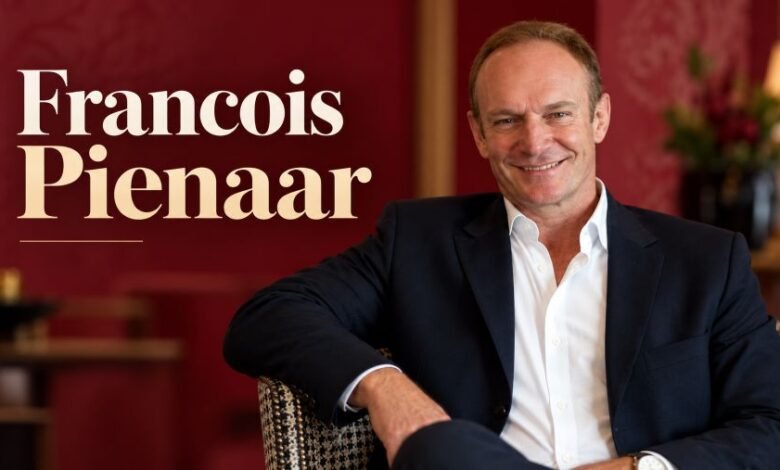
Introduction
Francois Pienaar is a former South African rugby player, businessman, and sports commentator. He is best known for captaining the Springboks to victory in the 1995 Rugby World Cup.
His career produced a moment that went far beyond rugby.
On 24 June 1995, Nelson Mandela handed him the Webb Ellis Cup at Ellis Park in Johannesburg. South Africa had just beaten New Zealand 15–12 after extra time.
The photograph became famous worldwide.
But his life did not begin with that trophy. Years of training, provincial rugby, difficult decisions, and growing responsibility came before it.
Today, he is also known for his business career, charity work, and contributions to South African sport.
Quick Facts About Francois Pienaar
| Detail | Information |
|---|---|
| Full Name | Jacobus Francois Pienaar |
| Popular Name | Francois Pienaar |
| Date of Birth | 2 January 1967 |
| Age | 59 years old (2026) |
| Birthplace | Vereeniging, South Africa |
| Nationality | South African |
| Profession | Former Rugby Player, Businessman, Sports Commentator |
| Rugby Position | Flanker / Back Row |
| Education | Rand Afrikaans University |
| Field of Study | Law |
| Former Provincial Team | Transvaal |
| Former English Club | Saracens |
| International Career | 1993–1996 |
| International Appearances | 29 |
| International Tries | 3 |
| International Points | 15 |
| Major Achievement | 1995 Rugby World Cup Winner |
| Wife | Nerine Pienaar |
| Children | Two Sons |
| Famous Film | Invictus (2009) |
| World Rugby Hall of Fame | 2011 |
Growing Up in South Africa
Francois Pienaar was born on 2 January 1967 in Vereeniging, South Africa.
He grew up in a working-class Afrikaner family. He was the eldest of four boys.
Sport interested him early.
Rugby became his main focus during his school years. He attended Hoërskool Patriot in Witbank, a South African town now called eMalahleni.
His ability caught attention.
He earned a scholarship to Rand Afrikaans University, where he studied law while continuing to play rugby.
Balancing education and competitive sport was demanding. Still, those university years gave him the chance to take his game further.
He had bigger ambitions.
Professional rugby was beginning to look like a real career.
University Education and Academic Recognition
His university experience played an important part in his early development.
He studied law at Rand Afrikaans University, an institution that later became part of the University of Johannesburg.
His sporting career soon took priority, but his connection with education continued.
In 2000, he received an honorary doctorate from the University of Hertfordshire in England.
Another honour came much later.
On 25 March 2026, the University of Johannesburg awarded him an honorary doctorate for his contribution to sport and society.
It was a meaningful return.
The university had its roots in the same institution where he once studied as a young rugby player.
Speaking at the ceremony, he described the recognition as a moment that brought his journey full circle.
The university’s official announcement also confirmed that his provincial rugby career began in 1989.
His First Big Steps in Rugby
His senior rugby career began with Transvaal in 1989.
The province, now represented by the Golden Lions, became the place where he established himself as a serious rugby player.
He played in the back row.
This position demanded physical strength, stamina, tackling ability, and the confidence to compete for possession.
His influence grew with experience.
Eventually, he became Transvaal’s captain.
According to the University of Johannesburg, he played 100 matches for Transvaal and captained the team on 89 occasions.
Those numbers tell a story.
He was trusted to lead.
In 1993, Transvaal enjoyed an outstanding season, winning the Currie Cup and the inaugural Super 10 tournament.
The team retained the Currie Cup in 1994.
These achievements helped establish his reputation before his most famous international success.
Becoming South Africa’s National Captain
In 1993, his rugby career reached another level.
He made his international debut for South Africa against France on 26 June 1993 in Durban.
The match ended 20–20.
Something unusual happened during that debut. He was already the team’s captain.
Most international players spend years earning that responsibility.
He received it immediately.
He went on to captain the Springboks in every one of his 29 Test appearances.
His international career lasted from 1993 until 1996.
During that period, he scored three tries and collected 15 international points.
World Rugby records that South Africa lost only eight of his 29 Tests as captain.
His leadership was recognised in 1994 when he was named International Rugby Player of the Year.
Still, his biggest match was ahead.
The World Cup That Changed Everything
South Africa hosted the Rugby World Cup in 1995.
It was a special moment for the country.
Apartheid had ended, and South Africa was adjusting to its new democratic future after the historic 1994 election.
Yet serious divisions remained.
Rugby had long been associated with the country’s white population, especially Afrikaners.
Many Black South Africans had viewed the Springbok emblem as a reminder of apartheid.
President Nelson Mandela saw a chance to bring people together through the national team.
Pienaar was the Springboks captain.
The two men came from very different backgrounds, but both recognised what the tournament could mean for South Africa.
The team started strongly.
South Africa defeated defending champion Australia in its opening match and continued through the tournament.
Romania, Canada, Western Samoa, and France also fell to the Springboks.
Then came the final.
A Historic Match at Ellis Park
On 24 June 1995, South Africa faced New Zealand at Ellis Park Stadium in Johannesburg.
New Zealand had an outstanding side.
Its players included Jonah Lomu, whose powerful attacking performances had attracted worldwide attention.
The final was tight.
Both teams defended fiercely. Neither managed to score a try.
The score was level at 9–9 after normal time.
Extra time followed.
Joel Stransky scored the decisive drop goal, giving South Africa a 15–12 victory.
The Springboks were world champions.
For the captain, the result was unforgettable.
For the country, the celebrations carried a much wider meaning.
The Famous Nelson Mandela Moment
One of the most recognised photographs in rugby history was taken after the final.
Nelson Mandela walked onto the field wearing a Springbok jersey bearing Pienaar’s number six.
He presented the Webb Ellis Cup to the captain.
The crowd celebrated.
For many South Africans, seeing Mandela embrace the Springbok captain was a powerful image of reconciliation.
It did not erase the country’s problems. But it gave people from different communities something to celebrate together.
Pienaar later spoke about the emotional experience of Mandela supporting the team.
Their meeting became closely associated with South Africa’s new national identity.
That single moment remains a major part of his public story.
What Happened After the World Cup?
Winning the Rugby World Cup did not guarantee a long international career.
His time with South Africa ended in 1996.
He was dropped from the Springboks under coach Andre Markgraaff, a decision that attracted considerable attention.
His last Test was against New Zealand at Newlands in Cape Town in August 1996.
He never played another international match.
It was a difficult ending.
Still, his rugby career was far from finished.
A move to England gave him another chance to work in the sport.
Starting a New Chapter in England
He joined Saracens, the English rugby club based in north London.
His responsibilities grew beyond playing.
He worked in a player-coaching role and helped the club compete against leading English teams.
Saracens achieved a major success in 1998.
They defeated Wasps to win the Tetley’s Bitter Cup.
It was an important trophy for the club.
Pienaar later moved into management.
In 2000, he retired from playing and became Saracens’ chief executive.
He eventually left the club’s executive role and returned to South Africa.
His experience in England gave him a different view of rugby, especially the commercial side of professional sport.
His Wife and Family Life
Francois Pienaar is married to Nerine Pienaar.
The couple have two sons, Jean and Stefaan.
His family lived in England during part of his time with Saracens.
Nelson Mandela also maintained a personal connection with the family after the 1995 World Cup.
Mandela attended the couple’s wedding and became godfather to their children.
That relationship meant a great deal to Pienaar.
He has spoken publicly about Mandela’s warmth towards his family.
Despite his public career, Pienaar has generally kept much of his everyday family life away from media attention.
His wife and children are known through established interviews and public biographies, but their private affairs do not need to become part of his sporting story.
A Career in Business
After professional rugby, Pienaar began working in sports business and media.
He used his experience as a player and club executive to develop a career outside the field.
His work included sports sponsorship and business development.
He was associated with FirstRand and First National Bank in sports-related roles.
In 2009, he established Advent Sport Entertainment and Media, commonly known as ASEM.
The company became involved in sports and entertainment media rights.
His professional background also includes connections with university sport and commercial sporting events.
Business became another long-term interest.
He continued speaking publicly about teamwork, leadership, and lessons learned during his rugby career.
Helping Young South Africans
Charity work became an important part of his life.
In 2003, he founded the Make A Difference Leadership Foundation.
The organisation helps young South Africans gain access to educational opportunities and leadership development.
Its support includes scholarship programmes and assistance intended to help students progress through their education.
Pienaar has spoken about the need to give young people opportunities they may otherwise struggle to access.
The foundation’s official website identifies him as its founder and executive chairman.
This work has continued long after his retirement from professional rugby.
For someone who once received a university sports scholarship, supporting education also carries a personal connection.
The Hollywood Film About His Life
His story reached a worldwide cinema audience in 2009.
That year, director Clint Eastwood released Invictus.
The film focused on Nelson Mandela’s relationship with the Springboks and the events surrounding the 1995 Rugby World Cup.
Matt Damon played Pienaar.
Morgan Freeman portrayed Mandela.
The film drew inspiration from John Carlin’s book Playing the Enemy: Nelson Mandela and the Game That Made a Nation.
It brought renewed attention to the rugby captain’s career.
Still, the movie is a dramatisation.
Some scenes and conversations were adapted for storytelling rather than reproduced as a complete historical record.
The real 1995 final remains the central event behind the film.
His Own Book and Television Appearances
Pienaar has also shared his experiences through writing.
In 1999, he co-authored Rainbow Warrior with Edward Griffiths.
The autobiography covers his rugby experiences and his place in South Africa’s changing sporting history.
Nelson Mandela contributed the foreword.
Pienaar later worked as a television rugby commentator and analyst.
He also appeared in interviews and documentaries discussing the 1995 World Cup.
His experiences gave him an unusual perspective.
Few sports commentators have captained a World Cup-winning national team during such a politically important period.
Awards and Career Achievements
His rugby career brought several major honours.
| Year | Achievement |
|---|---|
| 1993 | South African Rugby Player of the Year |
| 1993 | Currie Cup and Super 10 winner with Transvaal |
| 1994 | International Rugby Player of the Year |
| 1994 | Currie Cup winner with Transvaal |
| 1995 | Rugby World Cup-winning captain |
| 1998 | Tetley’s Bitter Cup winner with Saracens |
| 2000 | Honorary doctorate from University of Hertfordshire |
| 2005 | International Rugby Hall of Fame |
| 2011 | World Rugby Hall of Fame |
| 2026 | Honorary doctorate from University of Johannesburg |
World Rugby officially inducted him into its Hall of Fame in 2011.
The organisation recognises his international career and his role in South Africa’s first Rugby World Cup triumph.
His achievements are remembered for their sporting importance and the unusual circumstances surrounding the 1995 tournament.
What Is His Net Worth?
People often search for Francois Pienaar’s net worth.
But no dependable public financial record establishes an exact figure.
He has earned a living through professional rugby, club management, business activities, public speaking, and broadcasting.
His commercial work has continued for many years.
Even so, those career details cannot prove his personal wealth.
An exact net worth should not be stated without reliable financial evidence.
Where Is He Now in 2026?
As of 2026, Pienaar remains connected to sports business, charitable activities, and leadership speaking.
His Make A Difference Leadership Foundation continues to support educational opportunities for young South Africans.
One of his most recent confirmed public honours came on 25 March 2026.
The University of Johannesburg awarded him an honorary doctorate.
He attended the ceremony and spoke about his journey from university rugby to national recognition.
It was another proud moment.
More than three decades had passed since he first represented South Africa.
Yet the impact of the 1995 victory remained closely connected to his public life.
Why His Story Still Matters
Many rugby players win trophies.
Far fewer become associated with an important moment in their country’s history.
Pienaar’s career crossed that line in 1995.
He was captain of a team that South Africans had viewed very differently during apartheid.
Mandela’s public support for the Springboks helped change the atmosphere around the tournament.
The rugby result alone did not unite an entire country or solve its deep divisions.
But it created a shared moment.
People could see former political opponents celebrating the same victory.
That is why the photograph of Mandela and Pienaar remains so familiar.
And that is why his name continues to appear in discussions about sport and reconciliation.
Final Thought
Francois Pienaar’s life has taken him from school rugby in Witbank to the captaincy of South Africa, a World Cup victory, English club management, and business leadership.
The journey was not always smooth.
His international career ended sooner than many supporters expected. He faced the challenge of starting again in another country.
Yet one afternoon in Johannesburg still defines his sporting legacy.
A captain lifted a trophy.
A president stood beside him.
And millions of South Africans shared a rare moment of celebration.
More than thirty years later, that image still tells an important story.
Frequently Asked Questions
Who is Francois Pienaar?
He is a former South African rugby player who captained the Springboks to victory in the 1995 Rugby World Cup.
How old is he in 2026?
He is 59 years old. He was born on 2 January 1967 in Vereeniging, South Africa.
Who is his wife?
He is married to Nerine Pienaar. They have two sons.
How many Test matches did he play?
He played 29 international Test matches for South Africa between 1993 and 1996.
Did he play rugby in England?
Yes. He played for Saracens and later worked as the club’s chief executive.
What is his connection to Nelson Mandela?
Mandela presented him with the 1995 Rugby World Cup trophy. They later maintained a personal relationship.
Who played him in Invictus?
Matt Damon portrayed him in the 2009 film Invictus, directed by Clint Eastwood.
What does he do now?
He is involved in sports-related business, public speaking, and charitable work through the Make A Difference Leadership Foundation.