Statens Luftfartsvæsen: The Agency That Oversaw Danish Aviation
A look at Denmark's former civil aviation authority, its history, safety responsibilities, airport operations, and the government agency that replaced it.

Introduction
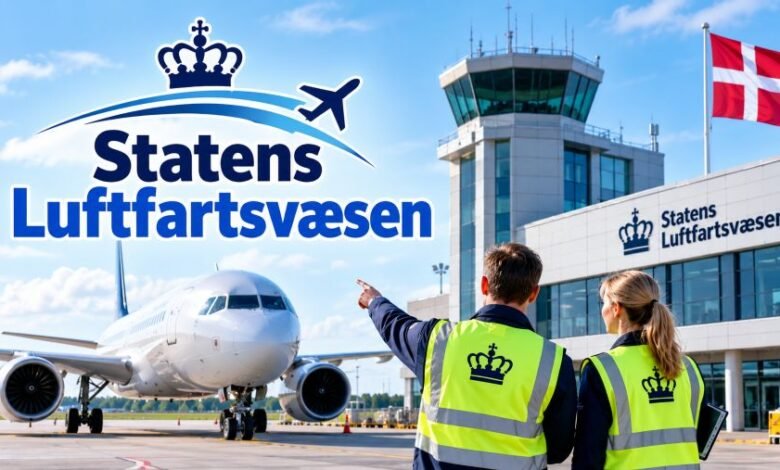
Statens Luftfartsvæsen was once a familiar name in Danish aviation. It handled important government duties. Aircraft safety was a big part.
But its work went further.
The authority dealt with aviation rules, airport operations, aircraft certification, and flight safety inspections. It also helped keep Denmark’s civil aviation system under proper supervision.
Today, the name belongs to history.
Statens Luftfartsvæsen (SLV) was Denmark’s former civil aviation authority. Its institutional roots date to March 1938. The agency stopped operating independently on November 1, 2010, when it joined Trafikstyrelsen.
So, what happened to it? And where did its responsibilities go?
Here is the complete story.
Quick Facts
| Detail | Information |
|---|---|
| Official Name | Statens Luftfartsvæsen |
| Short Name | SLV |
| Country | Denmark |
| English Description | Danish State Civil Aviation Authority |
| Organisation Type | Government aviation authority |
| Original Establishment | March 1, 1938 |
| SLV Name Introduced | 1980s |
| Former Parent Ministry | Danish Ministry of Transport |
| Main Industry | Civil Aviation |
| Primary Work | Aviation regulation and safety supervision |
| Former Air Navigation Division | Flyvesikringstjenesten |
| Air Navigation Successor | Naviair |
| Regulatory Successor | Trafikstyrelsen |
| Merger Date | November 1, 2010 |
| Current Status | No longer an independent authority |
| Former Website | www.slv.dk |
| Current Authority Website | www.trafikstyrelsen.dk |
A Closer Look at the Former Authority
Denmark has a long aviation history. As air travel developed, government supervision became necessary.
Aircraft needed proper checks. Pilots required recognised qualifications. Airports also needed safety rules.
Aviation authorities handled these responsibilities.
SLV became the government body responsible for many such tasks in Denmark. It worked under the Ministry of Transport and supervised civil aviation activities.
Its responsibilities affected several groups.
Airlines had to meet operating requirements. Aircraft operators needed suitable approvals. Flight schools and aviation businesses also worked within rules administered by the authority.
For ordinary passengers, much of this work remained unseen.
Still, it mattered.
Aviation safety depends on constant supervision. Rules must be followed during daily operations, not simply written down.
That was a central part of SLV’s job.
How Denmark’s Aviation Administration Began
The organisation’s history started before its familiar name appeared.
Earlier aviation bodies had already existed in Denmark. Government records identify the Luftfartskommissionen from 1918 and Luftfartsrådet from 1926.
These institutions formed part of the country’s early aviation administration.
A major change arrived in 1938.
On March 1 that year, an aviation directorate was established under the Ministry of Public Works.
The organisation developed over the following decades. Its work changed as civil aviation expanded.
In 1947, it became known as Direktoratet for Statens Luftfartsvæsen.
The shorter name, Statens Luftfartsvæsen, came into use during the 1980s. Denmark’s National Archives records 1984, while the Danish national encyclopedia Lex gives 1985.
Both sources describe the same historical authority.
Major Dates in Its History
| Year | What Happened |
|---|---|
| 1918 | An early aviation commission operated in Denmark |
| 1926 | Luftfartsrådet began its role |
| 1938 | Aviation directorate established |
| 1947 | Directorate renamed |
| 1980s | Statens Luftfartsvæsen name adopted |
| 2001 | Naviair separated from SLV |
| 2007 | Vágar Airport administration transferred to Faroese authorities |
| 2010 | SLV merged into Trafikstyrelsen |
The last change was permanent.
The name disappeared as an independent government agency, but much of its regulatory work continued.
What Were Its Main Responsibilities?
SLV handled many parts of Denmark’s aviation system.
Some duties involved technical safety. Others concerned operators, training, regulation, or airports.
Aircraft Safety Inspections
Aircraft safety was a major responsibility.
The authority supervised compliance with technical and operational requirements. Aircraft operators had to follow relevant rules.
Maintenance standards mattered too.
A safe aircraft needs proper servicing. Required equipment must also work correctly.
Regulatory inspections helped check compliance with these requirements.
Pilot Licensing and Training
Pilots need recognised qualifications.
SLV worked within the system regulating aviation personnel, flight training, and licensing.
Training organisations had to meet applicable requirements. Aviation personnel also needed the correct qualifications for their duties.
These checks supported flight safety.
Airport Safety and Supervision
Airports face different safety challenges.
Runways must meet operational requirements. Ground procedures need clear rules. Airfield equipment also requires supervision.
SLV had regulatory duties covering airports and aerodromes.
It also operated certain state airports during its history.
Aviation Security
Aviation safety and security are different.
Safety focuses largely on preventing accidents.
Security concerns deliberate threats, including unlawful interference with aircraft or airport activities.
SLV had duties related to both fields, working alongside other responsible authorities where needed.
Aircraft Registration
Aircraft registration formed another part of aviation administration.
The authority handled relevant registration matters and maintained records required under Danish law.
It also administered aspects of the registration of rights over aircraft.
These legal records could involve interests such as ownership-related or security rights.
Aviation Rules and Permissions
An aircraft operator cannot simply ignore aviation regulations.
Flight activities may require approval. Operators must follow the rules that apply to their operations.
SLV issued civil aviation regulations and exercised powers delegated under Danish aviation legislation.
This gave its decisions practical importance across the aviation industry.
Understanding the BL Aviation Rules
One important contribution was the Bestemmelser for Civil Luftfart, commonly called BL.
The Danish term means Regulations for Civil Aviation.
These rules addressed different aviation activities.
Examples included aircraft equipment, maintenance workshops, airport requirements, flight operations, aviation training, air routes, and certain charter operations.
The rules helped explain what operators had to do.
They also gave aviation businesses a common regulatory framework.
A government regulation issued in February 2009 confirmed SLV’s powers to issue BL regulations.
Many historical aviation documents still carry the SLV name.
That does not mean every old rule remains valid today. Anyone using these documents must check the current legal position.
Its Connection with Danish Airports
SLV had an operational role at certain airports.
Two locations stand out in its later history.
Bornholm Airport
Bornholm Airport serves the Danish island of Bornholm.
SLV operated the airport as part of its state responsibilities.
This was different from supervising an airport’s safety standards.
The agency had direct involvement in airport operations.
Following the 2010 merger, the responsibility passed into the new administrative structure under Trafikstyrelsen.
Vágar Airport in the Faroe Islands
The Faroese airport has its own history.
Vágar Airport was originally built during the Second World War.
An agreement signed in April 1963 provided for SLV to operate the airport. Passenger air travel began there in July of that year.
SLV remained involved for decades.
But things changed in 2007.
On May 1, the Faroese government assumed the airport’s administrative responsibilities.
In July 2008, P/F Vága Airport took over the airport’s activities.
This transition happened before SLV’s merger in Denmark.
What Was the Connection with Naviair?
Air traffic control is essential.
Aircraft move through busy airspace. Controllers and supporting systems help manage that traffic.
For years, SLV included a division called Flyvesikringstjenesten.
This division provided air navigation services.
Its work included air traffic control and related technical systems.
Then came a major change.
On January 1, 2001, the air navigation service was separated from SLV and established as Naviair, a separate state enterprise.
Why make the separation?
The government wanted a clearer division between operating air navigation services and regulating them.
This distinction matters.
An organisation providing a service has a different responsibility from the authority supervising that service.
Naviair continued the operational work. SLV retained its relevant regulatory responsibilities until the 2010 merger.
Staff, Leadership and Historical Finances
SLV was an established public organisation.
Its annual reports provide a useful picture of its operations.
According to its 2008 annual report, the organisation recorded 174 full-time equivalent positions that year.
Ordinary operating income was approximately 190.1 million Danish kroner.
The annual report also recorded a deficit of approximately 4.9 million Danish kroner for 2008.
These are historical figures.
They should not be presented as current agency finances.
Kurt Lykstoft Larsen was identified as aviation director in the 2008 report.
The agency’s former headquarters were located at Luftfartshuset, Ellebjergvej 50, DK-2450 Copenhagen SV.
That address belonged to the former organisation. It should not be treated as its present office.
Why Did Denmark Merge the Authority?
October 2010 brought the final decision.
On October 27, the Danish Ministry of Transport announced the merger of SLV and Trafikstyrelsen.
The change took effect five days later.
The government intended to bring transport regulatory and supervisory responsibilities together within one authority.
Road transport, railways, and aviation were part of this administrative arrangement.
The ministry also referred to stronger coordination of international work, including European Union matters.
Carsten Falk Hansen was named director of the combined authority.
The new organisation kept the name Trafikstyrelsen.
SLV no longer existed independently.
Its aviation regulatory responsibilities, however, continued under the successor authority.
Who Regulates Danish Civil Aviation Today?
The present authority is Trafikstyrelsen, the Danish Transport Authority.
It is responsible for Denmark’s national civil aviation regulatory work.
Its aviation duties include supervising aircraft operators, aviation personnel, safety requirements, and relevant aviation organisations.
The current framework also involves international standards.
The International Civil Aviation Organization (ICAO) develops global civil aviation standards.
European Union aviation law and the European Union Aviation Safety Agency (EASA) provide much of the regulatory framework applied in Denmark.
Trafikstyrelsen works within these systems.
Where Can People Find Current Information?
People looking for current Danish aviation rules should use Trafikstyrelsen’s official website.
Official website: https://www.trafikstyrelsen.dk/
The former SLV website should not be relied upon for current licensing, legal requirements, or safety information.
Old documents remain useful for historical research.
Current approvals require current rules.
Why Does Its History Still Matter?
Government agencies sometimes change their names.
Others merge with larger organisations.
SLV is an example of how Denmark reorganised its aviation administration over time.
Its earlier work covered technical standards, airport operations, aviation personnel, and industry supervision.
Some responsibilities later moved elsewhere.
Air navigation services went to Naviair in 2001. Vágar Airport administration transferred to Faroese authorities in 2007.
The remaining agency merged into Trafikstyrelsen in 2010.
These changes explain why different organisations appear in Danish aviation records.
A document from 1995 may mention SLV. A later document may refer to Trafikstyrelsen.
Both names belong to Denmark’s aviation administrative history, but they do not represent two currently operating national aviation regulators.
Final Thought
Statens Luftfartsvæsen served Denmark’s civil aviation system for many years.
Its work was often technical. Much of it happened away from public attention.
Yet that work affected aviation operations.
The authority issued rules, supervised safety requirements, and dealt with important airport and aviation matters.
Its history changed over time.
The air navigation division became Naviair. Some airport duties transferred to other authorities. Then the final merger arrived in November 2010.
Today, Trafikstyrelsen carries out the national civil aviation regulatory work.
The former SLV name remains relevant in historical documents, legislation, and records of Denmark’s aviation development.
Frequently Asked Questions
1. What was the former Danish aviation agency?
Statens Luftfartsvæsen was Denmark’s former civil aviation authority. It regulated and supervised many aspects of civil aviation.
2. When was the authority established?
Its institutional roots date to March 1, 1938. The Statens Luftfartsvæsen name appeared decades later.
3. Is the organisation still active?
No. It stopped operating independently on November 1, 2010, after merging into Trafikstyrelsen.
4. Who replaced the organisation?
Trafikstyrelsen became its regulatory successor. The authority handles Danish civil aviation regulatory responsibilities today.
5. What was the main purpose of SLV?
Its main purpose was to administer aviation regulation and safety supervision. It also had certain airport operating responsibilities.
6. Did it operate airports?
Yes. Its historical operations included Bornholm Airport and Vágar Airport in the Faroe Islands.
7. Was Naviair part of the agency?
Yes. Naviair originated from SLV’s air navigation service division and became a separate organisation in January 2001.
8. Where can old aviation records be found?
Denmark’s National Archives, government legislation database, and parliamentary records contain useful historical material.