Provascin: What Was This Heart Health Supplement Really Made For?
From its original ingredients and advertised uses to safety concerns and discontinued listings, here is what consumers should know.

Introduction
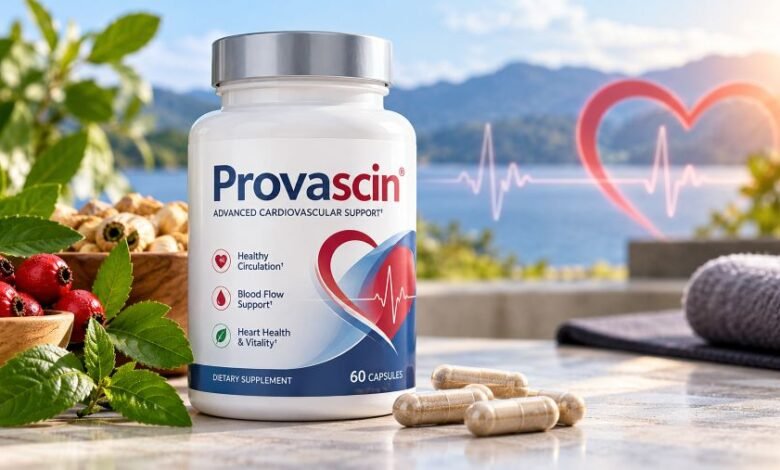
Provascin is a name that often appears in online searches about heart health, blood circulation, and nutritional supplements. At first, it can sound like a prescription medicine. But historical product records tell a different story.
The best-documented product was PURICA Provascin, a multi-ingredient dietary supplement marketed for cardiovascular support. Although some websites describe it as a blood pressure medicine, there is no reliable evidence establishing that the documented PURICA formula was an approved prescription drug.
So, what did it contain? Did it actually work? And can you still buy it?
Here is what the available information tells us.
Quick Facts
| Detail | Information |
|---|---|
| Product name | Provascin |
| Known brand | PURICA |
| Product category | Natural health supplement |
| Associated company | The Nutraceutical Medicine Company Inc. |
| Main advertised purpose | Cardiovascular and circulation support |
| Form | Capsules |
| Historical pack sizes | 120 and 240 capsules |
| Notable ingredients | L-carnitine, CoQ10, Chaga, grape seed extract |
| Prescription medicine | No, not for the documented PURICA formula |
| Current availability | Listed as discontinued or no longer carried by retailers |
| Proven treatment for heart disease | No established clinical evidence for the complete formula |
What Is This Product?
The original formula was created as a nutritional product containing several ingredients associated with metabolism, antioxidant activity, and general cardiovascular wellness.
It was not a single-ingredient medicine.
Instead, the manufacturer combined different nutrients and plant-derived substances in capsule form. These ingredients were selected for their potential roles in normal biological functions, including cellular energy production and protection against oxidative stress.
Historical listings from Canadian supplement retailers document its sale under the PURICA brand.
A trademark registration also identifies the Provascin name in connection with dietary supplements. The registration is associated with The Nutraceutical Medicine Company Inc., with a US registration date of March 29, 2016.
This helps establish the product’s commercial background. It does not, however, establish that its advertised health benefits were proven through clinical trials.
A Look at Its Original Ingredients
The historical formula contained a mixture of nutrients, botanical extracts, and mushroom material.
Older retail listings provide the following amounts per capsule.
| Ingredient | Historical amount |
|---|---|
| L-carnitine | 188 mg |
| Alpha-ketoglutaric acid | 125 mg |
| Micronized Chaga mushroom | 125 mg |
| Coenzyme Q10 | 38 mg |
| Betaine hydrochloride | 31 mg |
| DL-alpha-lipoic acid | 13 mg |
| Grape seed extract | 9 mg |
| Green tea extract | 9 mg |
These figures describe an older product formulation. They should not be assumed to apply to every item currently advertised under the same name.
L-Carnitine and Energy Production
L-carnitine is a substance involved in transporting fatty acids into mitochondria, where cells can use them for energy.
The body naturally produces carnitine, and it is also found in certain foods.
Researchers have examined carnitine supplements for different metabolic and cardiovascular conditions, but findings vary by condition and study.
Its presence in a supplement does not mean that the finished product prevents heart disease.
Coenzyme Q10 and Cell Function
Coenzyme Q10, commonly known as CoQ10, is naturally present in the human body.
It contributes to cellular energy production and also has antioxidant functions.
Because the heart requires a continuous supply of energy, CoQ10 has attracted considerable medical research interest.
However, the US National Center for Complementary and Integrative Health reports that the limited available evidence suggests CoQ10 probably does not have a meaningful effect on blood pressure.
That distinction matters. A biologically important ingredient is not automatically an effective treatment.
Chaga Mushroom and Antioxidants
Chaga is a fungus that grows mainly on birch trees in colder regions.
It contains several naturally occurring compounds studied for antioxidant and other biological activities.
Much of the research is preliminary. Laboratory findings cannot establish the same benefits in people taking a commercial supplement.
Chaga may also present safety concerns for some individuals, particularly those with kidney problems or those taking certain medicines.
Alpha-Lipoic Acid and Other Plant Extracts
Alpha-lipoic acid participates in energy metabolism and has antioxidant properties.
Grape seed extract contains compounds called polyphenols, while green tea extract contains catechins.
These ingredients have been studied separately for several possible effects.
Yet there is a difference between researching individual substances and proving that a specific combination improves health outcomes.
That gap is important when evaluating the original formula.
What Was It Marketed For?
Historical marketing connected the product with several areas of cardiovascular and metabolic wellness.
Supporting General Heart Health
One of its main advertised purposes was maintaining cardiovascular wellness.
The formula included ingredients associated with antioxidant activity and cellular function.
Still, no convincing product-specific clinical evidence was found showing that the complete formula prevents heart attacks, strokes, or other cardiovascular events.
Maintaining Healthy Circulation
Blood circulation carries oxygen and nutrients throughout the body.
Some ingredients in the formula have been investigated for possible vascular effects.
However, there is insufficient evidence to say the finished supplement improves poor circulation or treats vascular disease.
Anyone experiencing persistent leg swelling, unusual pain, or other circulation-related symptoms should seek medical advice rather than relying on a supplement.
Cholesterol and Metabolic Support
Historical promotional material also linked the formula to cholesterol and glucose metabolism.
These were advertised purposes, not established medical indications.
People with high cholesterol or diabetes need appropriate clinical assessment and, where necessary, treatments supported by medical evidence.
Antioxidant Activity
Antioxidants help control certain chemical reactions involving free radicals.
Several ingredients in the original capsule formula have antioxidant properties.
However, the presence of antioxidants in a product does not prove that taking it will reduce the risk of chronic disease.
How Did the Formula Aim to Work?
The original product appears to have been based on combining ingredients involved in several different biological processes.
Carnitine and alpha-ketoglutaric acid have roles in energy metabolism. CoQ10 participates in mitochondrial energy production. Some of the botanical ingredients contain compounds studied for antioxidant effects.
That gives the formula a possible biological rationale.
But a plausible mechanism is not the same as evidence of medical benefit.
To establish that a supplement improves cardiovascular outcomes, researchers would need carefully designed human trials examining the complete formula, appropriate doses, meaningful health outcomes, and possible adverse effects.
Without that evidence, its effectiveness remains uncertain.
Was It a Prescription Medicine?
No. The best-documented PURICA product was a dietary supplement, not a conventional prescription medicine.
This point causes confusion because some online descriptions incorrectly give the impression that the product was prescribed for hypertension or other cardiovascular diseases.
A supplement and an approved prescription medicine are not interchangeable.
In the United States, prescription drugs generally require evidence of safety and effectiveness for their approved uses. Dietary supplements are regulated under a different system.
The US Food and Drug Administration does not approve dietary supplements for safety and effectiveness before they are marketed.
Consumers should therefore be cautious about any seller claiming that an old supplement formula is an officially approved treatment for cardiovascular disease.
What Does Scientific Research Actually Show?
Research on individual ingredients offers some insight into their biological roles, but it cannot confirm that the complete historical formulation was effective.
For example, CoQ10 has been investigated for heart-related conditions, with results depending on the disease and outcome studied.
Other ingredients, including carnitine, alpha-lipoic acid, and various plant extracts, have also attracted research interest.
But combining ingredients does not guarantee that their effects add together.
Different substances can interact, their absorption may vary, and the amounts included in a commercial capsule may not match those studied in clinical trials.
The main limitation is the lack of reliable, direct clinical evidence demonstrating the complete product’s safety and effectiveness for specific cardiovascular conditions.
It should not be considered a substitute for proven medical treatment.
Possible Side Effects and Safety Concerns
A supplement containing several ingredients can create more complicated safety questions than a single-ingredient product.
Possible risks depend on the exact formulation, dose, medical history, and other medications being used.
Some ingredients can cause digestive discomfort. Others may affect blood glucose or interact with prescription medicines.
CoQ10, for example, may interact with warfarin and insulin. Concentrated botanical extracts may also have precautions that do not apply to consuming ordinary amounts of the same plants as food.
The original combination has not been sufficiently studied to provide a reliable complete side-effect profile.
People who are pregnant, breastfeeding, managing chronic illness, or taking regular medication should seek professional advice before using any comparable supplement.
Old, expired, or poorly stored capsules should not be used simply because they are still available online.
Why Online Information Can Be Confusing
Search for the product today and you may encounter several conflicting descriptions.
Some pages call it a medicine. Others describe a herbal treatment or a general wellness formula.
The differences can mislead readers.
A credible product description should identify the actual manufacturer, ingredients, intended use, and relevant regulatory status.
Another problem is confusion with medicines that have similar names.
For example, Provasin is a separate prescription product name associated with atorvastatin in some markets. It must not be confused with Provascin.
The exact spelling and active ingredients matter, especially when discussing products intended for medical use.
Is the Original Supplement Still Available?
Historical Canadian retailers previously listed the product in 120-capsule and 240-capsule packaging.
However, more recent listings show that availability has changed.
Vitamart identifies its PURICA listing as discontinued. National Nutrition also indicates that it no longer carries the historical product.
An exact manufacturer-confirmed discontinuation date was not established in the sources reviewed.
That means buyers should not assume an old product listing reflects current stock.
If someone encounters an offer using the same name, they should verify the manufacturer, packaging, ingredient list, expiry date, and seller before considering a purchase.
What to Check Before Buying Similar Supplements
A familiar-sounding product name is not enough to establish safety or quality.
Look for complete and readable ingredient information, a genuine manufacturer identity, batch or lot information, and accurate labeling.
Be particularly careful with products making promises such as curing heart disease, rapidly removing cholesterol, or replacing prescribed medication.
These statements deserve strong scientific evidence.
People using blood thinners, blood pressure medicine, diabetes treatment, or other long-term prescriptions should ask a pharmacist or clinician about possible interactions.
For cardiovascular health, regular medical care, appropriate physical activity, a balanced diet, smoking cessation, and control of established risk factors remain much better-supported measures.
Final Thought
Provascin has a documented history as a PURICA nutritional supplement associated with heart and circulation support.
Its original formula combined nutrients such as L-carnitine and CoQ10 with Chaga mushroom and plant extracts.
The interesting part is not simply what went into the capsules. It is the difference between the product’s advertised purposes and what research can actually establish.
Available evidence does not prove that the complete formula treats cardiovascular disease, controls blood pressure, or prevents serious heart-related events.
With the original product no longer routinely carried by several historical retailers, checking its identity and safety information matters even more.
Frequently Asked Questions
1. What is Provascin?
It is best documented as a former PURICA dietary supplement containing several nutrients and plant-derived ingredients, marketed for cardiovascular wellness.
2. What was the supplement used for?
The original marketing associated it with circulation, cardiovascular wellness, antioxidant activity, and metabolic support. These are not proven medical treatment indications.
3. Is it a blood pressure medicine?
The documented PURICA formula was not a prescription blood pressure medicine. It should not replace prescribed treatment for hypertension.
4. What were its main ingredients?
The historical formula included L-carnitine, alpha-ketoglutaric acid, Chaga mushroom, CoQ10, betaine hydrochloride, alpha-lipoic acid, grape seed extract, and green tea extract.
5. Was it FDA approved?
The documented product was a dietary supplement. The FDA does not approve dietary supplements for safety and effectiveness before they are marketed.
6. Can it cause side effects?
Potential side effects and interactions depend on its ingredients and dosage. There is insufficient product-specific evidence to establish a complete safety profile.
7. Can you still buy the original product?
Several historical Canadian retailers now mark it as discontinued or no longer carried. Current availability from other sellers has not been independently established.
8. Does it really improve heart health?
There is insufficient direct clinical evidence to confirm that the complete formula improves cardiovascular outcomes or prevents heart disease.