How to Keep Up With Gaming News TheHakeTech: Without Missing What Matters
A simple way to follow game releases, updates, patches, hardware news, esports stories, and community discussions without spending your whole day scrolling.

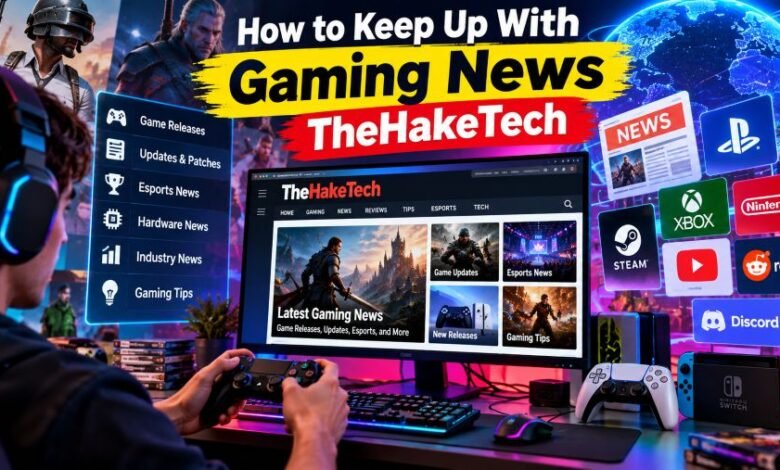
Introduction
Gaming news moves ridiculously fast.
One minute you are waiting for a release date. A few hours later, there is a new trailer, a surprise patch, a developer announcement, or a rumor spreading across social media.
That is why people searching How to Keep Up With Gaming News TheHakeTech are usually looking for something simple: a practical way to stay informed without checking dozens of websites every day.
The answer is not to read everything.
It is to build a small, reliable news routine.
Quick Facts
| Topic | Details |
|---|---|
| Main subject | Keeping up with gaming news |
| Useful for | PC, console, mobile, and esports fans |
| News to follow | Releases, patches, hardware, events, studio news |
| Useful source | TheHakeTech and other gaming publications |
| Best verification source | Official developers, publishers, and platform accounts |
| Time needed | A few focused checks rather than constant scrolling |
| Main risk | Mistaking rumors or leaks for confirmed news |
What Does “How to Keep Up With Gaming News TheHakeTech” Mean?
The phrase mainly refers to using TheHakeTech as part of a system for following gaming information.
TheHakeTech publishes gaming-related articles covering subjects such as game updates, gaming tips, industry changes, and other technology topics. Still, no single website can realistically cover every game, studio, patch, tournament, and hardware announcement immediately.
A better approach is simple.
Use a gaming news site to discover stories, then check the original source when a detail really matters.
That second step can save you from a lot of confusion.
Start With the Games You Actually Play
Do not try to follow the entire gaming industry.
Seriously.
If you mainly play PlayStation games, PC shooters, or a handful of mobile titles, build your news feed around those interests.
You might track:
- New game announcements
- Release dates
- DLC and expansion news
- Patch notes
- Server problems
- Balance changes
- Free updates
- Competitive seasons
- Esports events
- Hardware announcements
This cuts out a huge amount of noise.
Someone interested in competitive shooters probably does not need hourly updates about every mobile puzzle game. Likewise, a casual Nintendo player may have little reason to follow every PC graphics-card rumor.
Choose your lane first.
Check TheHakeTech for Gaming Stories
One answer to how to keep up with gaming news TheHakeTech is straightforward: check the site’s gaming-related posts when you want another source for stories and explanations.
Instead of opening the site randomly all day, give yourself a routine.
For example, you could check once in the morning or evening and open only stories connected to the games, platforms, or technology you care about.
This sounds almost too simple.
It works because it stops news checking from becoming endless scrolling.
You want information, not another distraction.
Always Check Official Gaming Sources Too
A gaming publication can help you discover a story. The original developer or publisher should usually be your next stop when you need confirmation.
Suppose you see a headline saying that a major update changes weapons, maps, system requirements, or multiplayer features.
Look for the original announcement.
Depending on the game, that might come from:
- The developer’s website
- The publisher’s newsroom
- Official patch notes
- PlayStation Blog
- Xbox channels
- Nintendo announcements
- Steam news pages
- Official game social accounts
Primary sources are especially useful for exact release dates, patch details, maintenance windows, system requirements, and pricing.
News sites give context.
Official sources give you the original announcement.
Use both.
Make Social Media Work for You
Gaming news spreads extremely quickly across social platforms.
That is useful. It is also where things get messy.
A screenshot with thousands of shares can still be fake. A supposed developer quote may be missing context. An old trailer can suddenly appear again and look new.
Instead of following hundreds of gaming accounts, create a smaller feed containing official studios, publishers, esports leagues, and a few gaming reporters or publications you regularly read.
Then mute the rest.
Your feed becomes much easier to scan.
The goal is not to see the most gaming posts. It is to notice the posts that matter.
Use YouTube for Bigger Gaming Stories
Some gaming stories make more sense in video form.
A written article can tell you that a game’s graphics have changed. A video can actually show you.
YouTube can be particularly useful for:
- Gameplay reveals
- Game trailers
- Hardware demonstrations
- Graphics comparisons
- Developer interviews
- Patch comparisons
- Performance testing
- Event highlights
There is a catch.
Titles and thumbnails often exaggerate.
“THIS CHANGES EVERYTHING” could turn out to be a tiny balance adjustment.
Watch the video, but look for its source. If the creator is discussing a developer announcement, find that announcement before treating every detail as settled fact.
Follow Patch Notes for Games You Play Regularly
If you spend hours playing one particular game, patch notes can be more useful than general gaming headlines.
They tell you exactly what changed.
A patch may alter weapon damage, fix crashes, change matchmaking, add a map, remove an exploit, or adjust character abilities.
Competitive players should pay particular attention.
A small numerical change can affect which strategies work and which characters or weapons become more common.
You do not need to read every line.
Scan the headings first. Then read the sections that affect the way you play.
Use Reddit and Discord — Carefully
Gaming communities can spot interesting developments incredibly fast.
Reddit threads and Discord servers often contain player reactions, bug reports, screenshots, tips, and discussion long before a polished article appears.
They are great for discovering what people are talking about.
They are not automatic proof.
That difference matters.
Treat community information as a lead until you can connect it to a reliable source. If someone claims a new game has been secretly delayed, look for an official statement or reporting that independently confirms it.
Rumors can be entertaining.
Just label them as rumors.
Separate News From Leaks
Leaks are now a major part of online gaming discussion.
Unannounced characters. Internal release dates. New consoles. Game maps. Studio projects.
Some leaks later prove accurate. Plenty do not.
A useful rule is to separate information into three groups:
Confirmed: Announced by a developer, publisher, platform holder, or another primary source.
Reported: Published by journalists or outlets citing their own sources, but not officially announced.
Rumored: Circulating through social posts, forums, screenshots, anonymous accounts, or unverified leaks.
This one habit can dramatically improve the quality of your gaming news diet.
You can still enjoy speculation.
You simply know what it is.
Set Notifications Only for Important Games
Notifications seem helpful until your phone starts buzzing every ten minutes.
Be selective.
Turn alerts on for a few games, developers, esports competitions, or platforms that matter most to you.
Everything else can wait for your daily news check.
This works particularly well when you are waiting for something specific, such as:
- A release date
- Pre-orders
- Server maintenance
- Tournament schedules
- Major patches
- DLC announcements
- Beta registration
- New hardware information
Urgent news deserves an alert.
Ordinary news does not.
Try a Simple 10-Minute Gaming News Routine
You do not need an hour.
Try this instead.
Spend the first few minutes scanning TheHakeTech or another gaming news source for interesting headlines.
Next, check the official pages for your main games.
Then spend a few minutes looking at your carefully selected social or community feed.
Done.
If a major story deserves deeper reading, save it for later rather than opening another ten tabs.
That keeps you informed without letting gaming news consume the time you could spend actually playing games.
What Gaming News Should You Pay Attention To?
Not every story needs your attention.
For most players, a handful of categories provide the most useful information.
New Releases
Track launch dates, delays, early-access periods, demos, betas, and pre-order information.
Updates and Patches
These matter most for games you already own and play regularly.
Gaming Hardware
Console revisions, graphics cards, handheld systems, controllers, headsets, and performance technology can affect what and how you play.
Esports
Tournament dates, team changes, results, qualification events, and rule changes are useful for competitive gaming fans.
Industry News
Studio closures, acquisitions, layoffs, publishing deals, and business changes can affect games that are already in development.
Deals and Subscription Updates
Changes to subscription libraries or limited-time free games can help players discover something new without paying full price.
How to Avoid Gaming News Overload
There is always another headline.
You will never read everything, and you do not need to.
Pick three types of sources:
- One or two gaming publications for general news.
- Official sources for confirmation.
- One community platform for discussion and reactions.
That is enough for most people.
You can add TheHakeTech to the publication side of that system and use developer or platform pages when you need direct confirmation.
Simple systems usually last longer than complicated ones.
Can You Rely on One Gaming Website?
Probably not if you want broad coverage.
Different publications focus on different topics, and even good outlets can miss a story or publish it later than another source.
Cross-checking becomes especially important when an article discusses:
- Leaks
- Rumored release dates
- Unannounced hardware
- Studio disputes
- Financial claims
- Anonymous sources
- Supposed insider information
For ordinary news, reading one article may be enough.
For a claim that could change your buying decision, checking another source takes only a minute.
Do it.
Final Thought
Learning how to keep up with gaming news TheHakeTech is less about constantly refreshing a website and more about creating a sensible information routine.
Use TheHakeTech and other gaming publications to discover stories. Follow official developers and platforms for direct announcements. Use social networks and gaming communities for discussion, but verify rumors before believing or sharing them.
Most importantly, filter aggressively.
The gaming world produces more news than anyone can realistically consume. Follow the games and platforms you care about, check your sources at fixed times, and spend the rest of your day doing something more enjoyable.
Like actually playing.
Frequently Asked Questions
What is How to Keep Up With Gaming News TheHakeTech?
It is a search phrase used by people looking for ways to follow gaming news through TheHakeTech and other gaming information sources.
Does TheHakeTech publish gaming content?
Yes. The site has published articles related to gaming updates, gaming hacks, gaming industry changes, and keeping up with gaming news.
What is the easiest way to stay updated with gaming news?
Follow a small number of gaming publications, official game accounts, developer pages, and platform news channels. Check them on a fixed schedule instead of constantly refreshing social media.
Where should I verify game release dates?
Whenever possible, check the official developer, publisher, storefront, or platform page. These are better sources for confirming exact dates.
Are gaming leaks reliable?
Some leaks turn out to be accurate, while others are incomplete, outdated, or false. Treat leaked information as unconfirmed unless reliable reporting or an official source verifies it.
How often should I check gaming news?
For most casual players, once or twice a day is plenty. Players following esports or live-service games may want more frequent updates during important events.
How can I avoid fake gaming news?
Look for the original source, check publication dates, compare reports from multiple outlets, and distinguish official announcements from rumors or anonymous claims.
Is social media good for gaming news?
It is excellent for finding stories quickly, but speed also allows false information to spread. Use social media for discovery and official sources for confirmation.