Neil MacGregor: The Museum Director Who Told History Through Objects
From the National Gallery and British Museum to books, BBC programmes and international museum work, Neil MacGregor has spent decades helping people understand history through art and objects.

Introduction
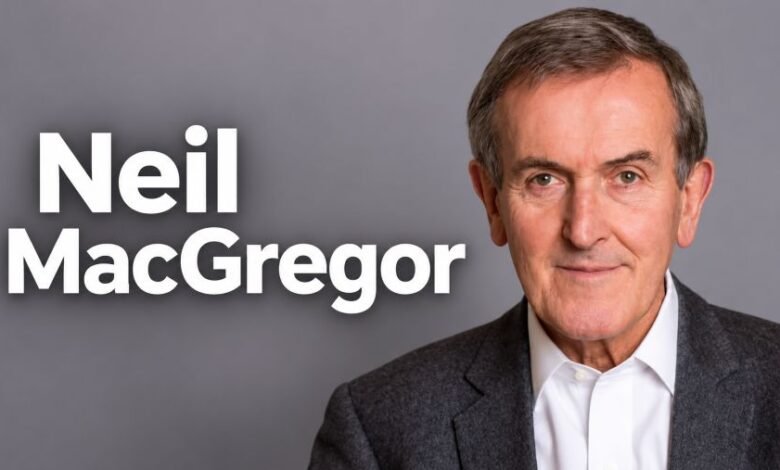
Neil MacGregor is a British art historian, writer and broadcaster best known for leading the National Gallery in London from 1987 to 2002 and the British Museum from 2002 to 2015. He later worked as a founding director of Berlin’s Humboldt Forum.
His career took an unusual path. Languages came first. Then philosophy. Then law. Art history followed.
That mix shaped his work.
MacGregor became widely known beyond museum circles through BBC programmes and books such as A History of the World in 100 Objects and Germany: Memories of a Nation. As of the latest institutional profile checked, updated in June 2025, he is described as an advisor to the J. Paul Getty Foundation in Los Angeles and the CSMVS Museum in Mumbai.
Quick Facts About Neil MacGregor
- Full name: Robert Neil MacGregor
- Professional name: Neil MacGregor
- Born: 16 June 1946
- Birth country: Scotland
- Profession: Art historian, writer and broadcaster
- National Gallery Director: 1987–2002
- British Museum Director: 2002–2015
- Humboldt Forum role: Founding Directorate, until 2018
- British Academy: Honorary Fellow since 2000
- Major honour: Member of the Order of Merit
- Known for: Museum leadership, cultural history, books and BBC broadcasting
His date of birth is recorded by the German Academy for Language and Literature, while the National Gallery confirms that he was born in Scotland in 1946.
Early Life and Education
Neil MacGregor was born in Scotland in 1946.
His education did not follow one straight line. Actually, that is one of the most interesting parts of his story.
He studied French and German at New College, Oxford. He then went to Paris and studied philosophy at the École Normale Supérieure.
Law came next.
MacGregor studied for an LLB at the University of Edinburgh and was called to the Scottish Bar. Yet law did not become his long-term professional path.
Art had a stronger pull.
He went on to study art history at the Courtauld Institute of Art in London and later built an academic career connected with the Courtauld and the University of Reading.
That background matters.
Languages helped him work across cultures. Law gave him another way to think about institutions and evidence. Art history became the field where those skills eventually came together.
Starting a Career in Art History
MacGregor worked in academic art history before moving into museum leadership.
One of his early major positions was editor of The Burlington Magazine, a long-running publication focused on fine and decorative arts.
The National Gallery records his editorship as running from 1981 to 1986.
Then came a big change.
In January 1987, MacGregor became Director of the National Gallery in London.
He stayed for about 15 years.
Neil MacGregor at the National Gallery
MacGregor led the National Gallery during a period that brought major changes to the institution.
The Sainsbury Wing opened in 1991, providing space for the Gallery’s early Renaissance collection. The National Gallery also credits his period as director with gallery refurbishment and a complete rehanging of the collection.
But he did something else too.
He talked directly to the public.
MacGregor appeared in BBC television projects including Making Masterpieces and Seeing Salvation. That work helped take discussions about paintings outside specialist museum and university circles.
Basically, he treated public explanation as part of museum work rather than something separate from it.
His National Gallery directorship ended in 2002.
Another major job followed almost immediately.
Becoming Director of the British Museum
Neil MacGregor became Director of the British Museum in August 2002.
He remained there until 2015.
This became one of the best-known periods of his career.
The British Museum says visitor numbers to its Bloomsbury collection increased by 40% during his directorship. The museum also reached people through radio programmes and online work.
MacGregor pushed the idea that museum objects could help explain world history.
Not just art history.
Human history.
A small object could open a much bigger story about trade, belief, conflict, migration, power or everyday life.
That idea became especially clear in one famous project.
A History of the World in 100 Objects
In 2010, MacGregor presented the BBC Radio 4 series A History of the World in 100 Objects, created with the British Museum.
The idea was simple but huge.
Take 100 objects. Use them to tell stories from across human history.
The project later became one of MacGregor’s best-known books.
The British Academy notes that both the book and radio work reached audiences internationally. It later recognised A History of the World in 100 Objects alongside Germany: Memories of a Nation with its 2015 Nayef Al-Rodhan Prize for Transcultural Understanding.
This project explains much of MacGregor’s public reputation.
He could take an object sitting behind museum glass and explain the people, places and ideas around it in clear language.
That worked well on radio.
It worked in print too.
Other Books and Broadcasting Work
MacGregor’s public work has included several major books and broadcast projects.
Among his recognised titles are:
- Seeing Salvation
- A History of the World in 100 Objects
- Shakespeare’s Restless World
- Germany: Memories of a Nation
- Living with the Gods
Germany: Memories of a Nation looked at German history through objects, places and memories.
Living with the Gods examined religion, belief and society across different cultures.
His work often follows a similar method: start with something physical, then use it to explain a much wider human story.
Clear object. Bigger question.
That became his signature way of communicating history.
Leaving the British Museum
MacGregor’s British Museum directorship ended in 2015.
By then, he had led the institution for more than a decade.
The museum’s own review said that by 2015 it was attracting close to seven million visitors annually and had been the UK’s leading visitor attraction for nine consecutive years.
Leaving London did not end his museum work.
Berlin came next.
Work With the Humboldt Forum
From 2015, Neil MacGregor became involved with the Humboldt Forum in Berlin.
The Humboldt Forum describes him as a British art historian who served as Director of its Founding Directorate until 2018.
The project brought together collections, history, culture and public discussion inside the reconstructed Berlin Palace.
For MacGregor, the role made sense.
His earlier work had already focused heavily on connections between objects, countries and historical periods.
He remained with the founding leadership until 2018.
What Is Neil MacGregor Doing Now?
MacGregor no longer runs the National Gallery, British Museum or Humboldt Forum.
His work has continued through writing, broadcasting, lectures and museum-related projects.
A Salzburg Global profile last updated on 16 June 2025 describes him as an advisor to the J. Paul Getty Foundation in Los Angeles and the CSMVS Museum in Mumbai.
The profile also identifies him simply as an art historian, writer and broadcaster.
That is probably the clearest way to describe his current professional position.
He still works around museums and cultural history, but his public role is now different from the executive museum-director posts that defined much of his earlier career.
Neil MacGregor and the Order of Merit
One of MacGregor’s highest honours came in 2010.
Queen Elizabeth II appointed him to the Order of Merit on 4 November 2010, while he was Director of the British Museum.
The Order is restricted to a small number of members and is given personally by the Sovereign.
MacGregor remains listed among its current members on the Royal Family’s official website.
He was also elected an Honorary Fellow of the British Academy in 2000.
Awards and Recognition
MacGregor has received recognition from cultural and academic organisations in Britain and Europe.
His confirmed honours include:
- Honorary Fellow of the British Academy — 2000
- Order of Merit — 2010
- Friedrich Gundolf Prize — 2015
- Nayef Al-Rodhan Prize for Transcultural Understanding — 2015
The Friedrich Gundolf Prize recognised his work communicating German culture outside Germany. The German Academy records both his 2015 award and his birth date of 16 June 1946.
The British Academy prize recognised A History of the World in 100 Objects and Germany: Memories of a Nation.
Why Neil MacGregor Became So Well Known
MacGregor spent years running famous museums.
But titles alone do not explain his public profile.
The main point is communication.
He found a way to talk about history without starting with long lists of dates. Instead, he often started with an object.
A statue.
A tool.
A painting.
A coin.
Then the story grew from there.
His BBC work gave that approach a much bigger audience, while his books let readers follow the same idea at their own pace.
So his career connects three main areas: museums, history and public broadcasting.
From Law to Museum Leadership
MacGregor’s route into museum work was hardly obvious.
He studied languages.
Then philosophy.
Then law.
He qualified for the Scottish Bar.
Yet he changed direction and studied art history instead.
That choice eventually led him from academic work to The Burlington Magazine, then the National Gallery, the British Museum and the Humboldt Forum.
It is a sharp career shift.
And it helps explain why his professional background looks different from that of someone who trained only in museum studies from the start.
Neil MacGregor’s Lasting Work in Museums
MacGregor’s museum career is closely tied to the idea of making collections understandable to a wide public.
At the National Gallery, television became part of that work.
At the British Museum, radio and digital publishing reached audiences far outside London.
Then his books carried the same approach into homes, schools and libraries.
The numbers were real too.
The British Museum reported a 40% increase in visitors to its Bloomsbury collection during his directorship.
His later work kept the international focus.
Berlin, Los Angeles and Mumbai all appear in the next stage of his professional story.
Verified Interesting Facts
He trained in law first.
MacGregor completed an LLB at Edinburgh and was called to the Scottish Bar before choosing art history.
He studied in both Britain and France.
His education included New College, Oxford, the École Normale Supérieure in Paris, Edinburgh and the Courtauld Institute.
He led two major London museums.
He directed the National Gallery before moving directly into leadership of the British Museum.
His work reached far beyond museum visitors.
BBC programmes, radio series and books helped make him known to people who may never have attended one of the institutions he directed.
He is a member of the Order of Merit.
He received the appointment from Queen Elizabeth II in 2010 and remains on the official current-members list.
Final Thought
Neil MacGregor built his career around museums, but his work reached much further than museum walls.
He started with languages and law. Art history changed the path.
Then came the National Gallery, the British Museum, Berlin, books and broadcasting.
The common thread stayed clear: take an object, check its history and explain why it matters.
That simple method helped make MacGregor one of Britain’s best-known public voices on museums and cultural history.
Frequently Asked Questions
Who is Neil MacGregor?
Neil MacGregor is a British art historian, writer and broadcaster. He previously directed the National Gallery and the British Museum and later worked with the Humboldt Forum in Berlin.
When was Neil MacGregor born?
He was born on 16 June 1946. The German Academy for Language and Literature records this date.
Was Neil MacGregor Director of the British Museum?
Yes. He became Director of the British Museum in 2002 and remained in the position until 2015.
Did Neil MacGregor work at the National Gallery?
Yes. He became Director of London’s National Gallery in 1987 and served until 2002.
What is Neil MacGregor famous for?
He is known for directing major museums and for explaining history through objects in books and BBC broadcasts, especially A History of the World in 100 Objects.
Did Neil MacGregor study law?
Yes. He earned an LLB from the University of Edinburgh and was called to the Scottish Bar before moving into art history.
What award did Neil MacGregor receive from the Royal Family?
Queen Elizabeth II appointed him to the Order of Merit in 2010.
What is Neil MacGregor doing now?
The latest institutional profile checked, updated in June 2025, describes him as an art historian, writer and broadcaster and as an advisor to the J. Paul Getty Foundation and CSMVS Museum in Mumbai.