Ben Zand: The Investigative Filmmaker Behind ZANDLAND
From BBC reporting and dangerous access-led documentaries to a self-funded YouTube series, Ben Zand has built a career around entering communities that mainstream audiences rarely see from the inside.

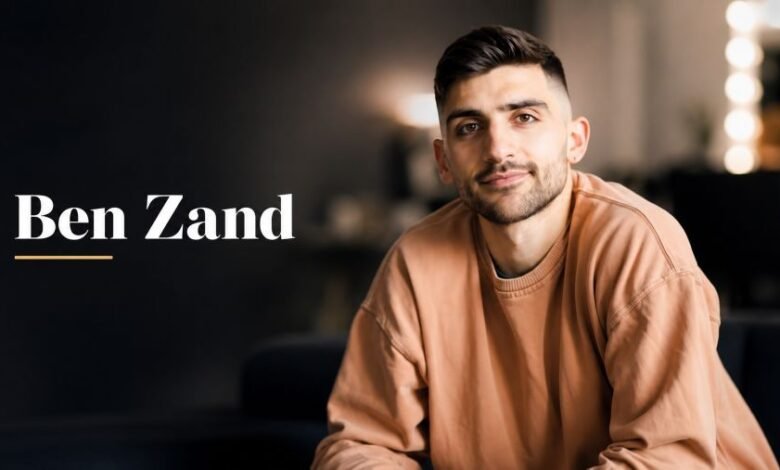
Introduction
Ben Zand’s work tends to begin where conventional access ends. He has reported around criminal networks, conspiracy movements, incel communities, controversial online subcultures and conflicts in the Middle East, often placing himself directly inside the story rather than narrating it from a studio.
That approach has taken the British-Iranian filmmaker from the BBC to his own production company, ZANDLAND, and from traditional television commissions into an increasingly direct relationship with online audiences. His work has earned a Royal Television Society award, an Association for International Broadcasting award and a BAFTA Television nomination.
What makes Zand’s career particularly interesting now is not simply the subjects he covers. It is the way he is trying to make investigative documentaries at a time when broadcasters, independent producers and audiences are all reconsidering where serious factual films should live.
Quick Facts About Ben Zand
| Fact | Details |
|---|---|
| Full name | Benjamin Zand |
| Profession | Filmmaker, journalist, producer and director |
| From | Liverpool, England |
| Heritage | British-Iranian |
| Company | ZANDLAND |
| Role | Founder and CEO |
| Earlier work | BBC Pop Up, BBC Studios, Panorama |
| Major subjects | Crime, extremism, internet culture, identity, politics and conflict |
| RTS recognition | Young Talent of the Year, 2016 |
| AIB recognition | Winner for The Cult of Conspiracy: QAnon, 2022 |
| BAFTA recognition | Kingpin Cribs nominated in Television Short Form, 2023 |
| Recent projects | HUMAN, The Zandland Show, Breaking Ranks and 2026 investigations |
Sources: Royal Television Society, Sandford St Martin Trust, BAFTA, AIB, Channel 4, ITV and ZANDLAND.
A Liverpool Beginning Without an Established Route Into Journalism
Zand was born in Liverpool and describes himself professionally as British-Iranian. His connection to Iran has later become relevant to his reporting, but his journalism career was built in Britain rather than inherited through an established media network.
The Royal Television Society’s account of his early career says he entered journalism without connections to the BBC or the wider industry.
While still at university, he created a travel website called Informed Explorer and began making video content. He also pursued work experience aggressively, later recalling placements with Discovery Channel, The Scotsman, the Edinburgh Evening News and the BBC.
Those details help explain an important feature of his later filmmaking. Zand learned early to operate as more than an on-screen presenter. Shooting, finding stories, developing contacts and understanding production were part of his route into television.
That self-starting approach would eventually become central to ZANDLAND.
The BBC Years Established His Investigative Style
By 2017, the Royal Television Society described Zand as editor of BBC Pop Up, the corporation’s travelling current-affairs bureau, as well as a programme-maker for Panorama.
BBC Pop Up was particularly suited to the type of journalist he was becoming. Instead of remaining in one newsroom, its model involved travelling, identifying local stories and producing films from the places being covered.
His work was noticed quickly.
At the 2016 RTS Television Journalism Awards, Zand won Young Talent of the Year for films made for BBC Two’s Victoria Derbyshire programme. RTS later said the judges praised the originality, range and creativity of his reporting, much of which he filmed himself.
Zand later worked as a documentary executive for BBC Studios, according to the Sandford St Martin Trust, before building his independent production career.
The BBC period gave him institutional experience. But the type of stories associated with him increasingly depended on something harder to standardise: access.
Dangerous People Became a Recurring Subject — but Not the Whole Story
Zand’s documentaries have repeatedly taken him into environments where the people being interviewed may be secretive, criminal, extremist or simply unwilling to speak to mainstream journalists.
At an RTS discussion on investigative reporting, he referred to filming with kidnapping gangs in Venezuela while discussing the risks involved in field journalism. His view was not that danger itself makes journalism worthwhile, but that some stories cannot be reported properly without accepting carefully managed risk.
That approach later appeared in projects involving drug traffickers and arms dealers.
In Kingpins, Zand travelled to Culiacán, Mexico, to spend time with a drug trafficker; to Lebanon to investigate an arms dealer; and around the UK to examine criminal drug networks. The films also looked at the people affected by those activities rather than presenting organised crime purely as spectacle.
That distinction matters. Access to dangerous figures can easily become entertainment. Zand’s strongest work tries to place the access alongside consequences.
ZANDLAND Turned Ben Zand From Filmmaker Into Company Founder
Zand founded ZANDLAND, an independent factual-production company with bases in Liverpool and London. Broadcast reported in 2026 that the company was founded in 2017.
Its growth received institutional support when ZANDLAND joined Channel 4’s Emerging Indie Fund in 2021. Channel 4 later highlighted the company in its 2022 annual report, pointing to its work on documentaries including Kingpin Cribs, Inside the Shein Machine and The Secret World of Incels.
The relationship was important because it allowed Zand’s access-led reporting style to develop into a production-company model rather than remaining tied solely to his individual presenting career.
Kingpin Cribs became a significant early success. BAFTA’s official records show that it was nominated in the Television Short Form category at the 2023 Television Awards, with Benjamin Zand among the credited nominees.
QAnon and Incels Expanded His Focus From Crime to Radicalisation
Zand’s interest in people at the edges of society gradually moved beyond conventional organised crime.
One example was The Cult of Conspiracy: QAnon, made by ZANDLAND for Channel 4.
The documentary examined how people become absorbed into QAnon and related conspiracy beliefs. It won the International Affairs Documentary TV/Video category at the 2022 AIB Awards.
The AIB judges praised its investigative depth, footage and access, describing it as the clear winner in its category.
Another important project was Untold: The Secret World of Incels.
The production followed roughly a year of investigation into the online incel movement. Production company Caravan said the film gained access to members of the community while examining violent and extremist material circulating in its online spaces.
This subject did not disappear after one programme.
Zand continued reporting on incels, masculinity, dating and male online communities, making them some of the most persistent themes of his later career.
His Method Is More Curious Than Confrontational
The subjects in Zand’s documentaries can invite easy condemnation. His presentation style generally takes a different route.
He spends time with people, lets them explain themselves and then challenges inconsistencies as the film develops.
Channel 4 described a similar intention when commissioning ZANDLAND’s five-part Life Uncovered series. The programme examined unconventional lifestyles and controversial identities while trying to understand why people adopted them. Zand said the aim was to find nuance in subjects that are normally reduced to polarised arguments.
The episodes included people involved in biohacking, private sperm donation, claimed psychic abilities and forms of identity experimentation.
This does not mean the films are neutral in the sense of refusing to examine evidence. Rather, the interviewing strategy often relies on allowing subjects enough space to expose their own reasoning.
That approach is particularly useful when investigating online radicalisation. Simply telling viewers that an ideology is extreme explains very little about why someone found it convincing in the first place.
From Incels to Boy Racers: The Internet Is Often the Real Setting
Even when Zand’s films appear to concern completely different subjects, a common factor increasingly connects them: the internet.
In The Secret World of Boy Racers, made for Channel 4’s Untold strand, he investigated illegal and dangerous driving communities whose activities were amplified through social-media accounts attracting large audiences.
His work on incels examines communities formed online. QAnon depends on internet networks. Later projects investigated looks-focused online cultures, pornography-related communities and the relationship between digital isolation and modern masculinity.
Seen together, these films are less random than they first appear.
Zand is frequently reporting on the point where online behaviour becomes offline life.
HUMAN Marked a Major Shift Away From Waiting for Broadcasters
The biggest change in Zand’s recent career has come from distribution rather than subject matter.
In September 2025, ZANDLAND launched HUMAN, a documentary series made for YouTube and financed internally rather than created in response to a conventional broadcaster commission. Broadcast described ZANDLAND in 2026 as one of the independent producers actively experimenting with a direct-to-consumer model.
ZANDLAND calls HUMAN its most ambitious project and says the series has filmed across the United States, South Africa, the Central African Republic, Israel and Palestine, and Brazil.
The significance is larger than simply putting documentaries on YouTube.
Traditional independent television producers normally develop an idea and secure financing from a broadcaster or streaming service. HUMAN reverses part of that structure: ZANDLAND commissions itself, owns a direct relationship with viewers and then looks at revenue models around audiences, partnerships and subscriptions.
That gives the company more editorial freedom. It also transfers more financial risk onto the producer.
Zand therefore sits inside a much wider question facing factual television: whether serious documentaries can build sustainable businesses without depending entirely on traditional commissioning.
Traditional Broadcasters Have Not Disappeared From the Picture
ZANDLAND’s move toward direct distribution has not meant abandoning television.
In November 2025, ITV commissioned Breaking Ranks: Inside Israel’s War, directed by Zand. The documentary featured interviews with Israeli soldiers, reservists and veterans discussing their experiences during the Gaza war and allegations concerning military conduct.
The project demonstrated that ZANDLAND was pursuing both models simultaneously: major broadcaster investigations alongside self-financed digital originals.
That hybrid strategy may be more important than choosing television or YouTube outright.
Iran Has Become a More Personal Part of His Reporting
Zand’s British-Iranian background gives his recent work on Iran a different dimension.
He has publicly explained that he has family in Iran and that the potential consequences for relatives made him cautious about reporting on the country for many years. In a public statement, he said he had visited Iran when he was around 15 but had not returned after becoming a journalist because of the risks involved.
In 2026, reporting around Iran became much more prominent in his work.
The Observer published reporting by Zand in August 2026 connected to rare testimony from people inside the country, while the documentary Inside Iran: War & Revolution was released that month with Zand credited as director and executive producer.
That work represents something slightly different from his investigations into internet subcultures or organised crime. The subject is tied directly to his family heritage and to the restrictions that had previously shaped what he felt able to report.
ZANDLAND Is Becoming More Than a Production Company
Zand’s current strategy increasingly resembles a media brand rather than a conventional television indie.
In 2026, the company launched The Zandland Show, a weekly programme built around conversations with journalists, filmmakers, creators and people involved in major public events. ZANDLAND says the programme has accumulated more than 100,000 listens since launch. Because that figure comes from the company itself, it is best treated as a company-reported audience number rather than an independently audited measurement.
He has also worked in podcasting beyond his own company. Channel 4 announced Untangled, a current-affairs podcast fronted by Stacey Dooley and Zand, designed to explain stories circulating heavily on social media.
These projects point toward a broader ambition: documentaries remain central, but ZANDLAND is building across video, podcasts, live events and direct audience membership.
Recognition and Awards
Three pieces of recognition stand out because they come from established industry organisations.
The Royal Television Society named Zand Young Talent of the Year at its 2016 Television Journalism Awards.
The Association for International Broadcasting awarded The Cult of Conspiracy: QAnon the 2022 prize for International Affairs Documentary TV/Video.
And BAFTA nominated Kingpin Cribs for its 2023 Television Short Form award, with Zand credited among the nominated production team.
Together, those honours trace the development of his career: first recognition as an individual journalist, then recognition for investigative work created through his own company.
What Ben Zand’s Career Actually Represents
It is easy to describe Ben Zand simply as a filmmaker who meets unusual or dangerous people. That misses the more interesting pattern.
His career combines three changes in modern factual journalism.
First, access has become a form of differentiation. When audiences can find commentary on almost any subject instantly, original reporting depends increasingly on reaching people and places that cannot simply be researched from a desk.
Second, many of the communities shaping politics, masculinity, identity and extremism now develop online before their consequences appear in the physical world. Zand’s repeated attention to internet subcultures reflects that shift.
Third, documentary distribution itself is changing.
With HUMAN and ZANDLAND’s other direct-to-audience projects, Zand is testing whether investigative filmmakers can maintain the depth associated with television while adopting the speed, independence and audience relationship of digital platforms.
It is not yet clear whether that business model can consistently finance expensive international reporting. Even ZANDLAND’s continuing work with Channel 4, ITV and other established platforms shows that traditional broadcasting remains important.
But the experiment is already significant.
Ben Zand began by making videos while still at university, entered the BBC without an established media network, became an award-winning reporter and then built an independent company around the same principle that drove his early career: find a story, gain access and make the film rather than waiting for someone else to create the opportunity.
Frequently Asked Questions
Who is Ben Zand?
Ben Zand is a British-Iranian investigative filmmaker, journalist, producer and director from Liverpool. He is the founder and CEO of ZANDLAND.
What is Ben Zand known for?
He is known for access-led documentaries about criminal networks, incels, conspiracy movements, internet subcultures, identity and international conflict.
What is ZANDLAND?
ZANDLAND is an independent documentary studio founded by Zand and based in Liverpool and London. It produces television, digital documentaries and podcasts.
Did Ben Zand work for the BBC?
Yes. He was editor of BBC Pop Up, worked on Panorama and later worked as a documentary executive at BBC Studios.
Has Ben Zand won awards?
Yes. He won the RTS Young Talent of the Year award in 2016, while The Cult of Conspiracy: QAnon won an AIB award in 2022. Kingpin Cribs was also BAFTA-nominated in 2023.
What is HUMAN?
HUMAN is ZANDLAND’s self-funded documentary series distributed directly through YouTube. It launched in 2025 and covers communities and social issues across several countries.
Is Ben Zand Iranian?
Zand is British-Iranian and grew up in Liverpool. He has family connections to Iran and has increasingly reported on the country and its politics.
Final Thoughts
Ben Zand’s strongest work is built around proximity. He does not merely report that a fringe community, criminal network or political conflict exists; he tries to get close enough to understand how the people inside it see themselves.
That approach carries obvious risks. Access can become spectacle, and giving controversial people airtime requires careful context. His films are most effective when the access serves explanation rather than shock.
His next phase may be just as important for the documentary industry as the stories themselves. Through ZANDLAND, HUMAN and a growing range of direct-to-audience projects, Zand is testing whether investigative filmmaking can become less dependent on traditional gatekeepers without losing the reporting standards that made the work valuable in the first place.
For a journalist whose career started by making his own videos before anyone had commissioned them, the direction is remarkably consistent.