Lucy Hough: The Guardian Journalist Redefining Modern Audio News
How a New Generation of Journalists Is Making Complex News Easier to Understand

Introduction
News consumption has changed dramatically. Many people no longer wait for traditional evening broadcasts or read long newspaper reports from beginning to end. Instead, they look for trusted explanations that fit into busy daily routines. This shift has created demand for journalists who can quickly explain important events without losing accuracy or context.
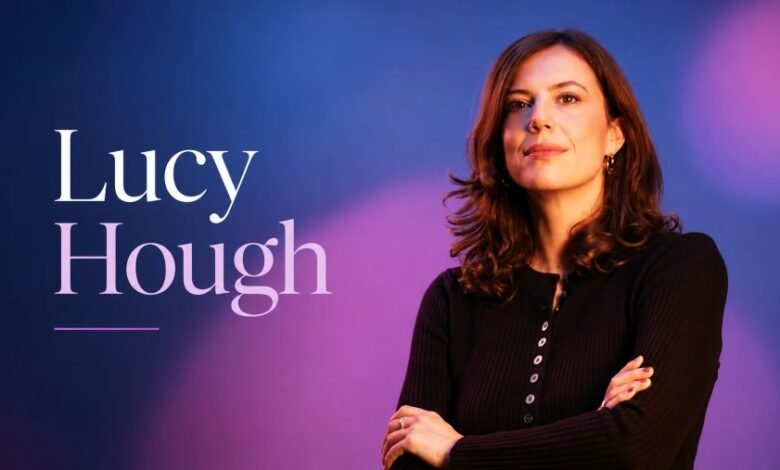
Lucy Hough represents this changing style of journalism. As an audio journalist and presenter at The Guardian, she has become associated with modern news formats that combine speed, explanation, and accessibility. She is best known as the host of The Latest, the evening edition of Today in Focus, a short-form audio and video news programme designed to help audiences understand the biggest story of the day.
Unlike celebrity-focused media personalities, Lucy Hough has maintained a professional profile centred on journalism rather than personal publicity. Public information about her private life, early years, education, and family background is limited. What can be clearly examined is her contribution to digital journalism and the changing role of audio reporting.
Quick Facts About Lucy Hough
- Profession: Journalist, audio journalist, and presenter
- Known for: Hosting The Latest from Today in Focus at The Guardian
- Organisation: The Guardian
- Main field: Digital news, audio journalism, explanatory reporting
- Notable format: Short daily news updates combining audio and video
- Public profile: Primarily professional, with limited personal information available
Lucy Hough’s Role in The Guardian’s Audio Journalism Expansion
Lucy Hough’s work comes during a period when major news organisations are investing heavily in podcasts and digital audio. Readers and listeners increasingly expect news to be available whenever and wherever they need it.
The Guardian’s Today in Focus podcast was created around the idea of bringing audiences closer to reporting through deeper analysis, interviews, and first-hand accounts. The programme later expanded with The Latest, hosted by Lucy Hough, to provide shorter updates focused on major developments.
The format reflects a wider change in journalism. Breaking news is now available instantly through social media, but audiences often struggle with understanding what events actually mean. Short explanatory programmes attempt to fill this gap by combining speed with editorial judgement.
Lucy Hough’s role is therefore not simply delivering headlines. Her work involves helping audiences understand why a story matters and connecting them with specialist Guardian journalists who provide deeper knowledge.
Why Short-Form News Has Become More Important
The growth of podcasts and digital platforms has changed audience expectations.
People increasingly consume information through:
- Smartphones
- Podcast applications
- Video platforms
- Social media channels
This has created a challenge for traditional news organisations. They must compete for attention while maintaining accuracy and trust.
A short news format must balance two difficult goals:
- Deliver information quickly.
- Provide enough context to prevent misunderstanding.
This is where explanatory journalism becomes valuable. Instead of only answering “what happened?”, it attempts to answer “why is this happening?” and “what should people understand about it?”
The Guardian describes The Latest as a way to bring audiences up to speed on the main news story of the day in around 10 minutes. The programme is available through podcast platforms and YouTube.
The Difference Between Breaking News and Explaining News
Modern audiences have access to more information than ever before. However, more information does not always mean better understanding.
A social media post may announce an event within seconds, but it rarely explains:
- Historical background
- Political consequences
- Different perspectives
- What happens next
This creates space for journalists like Lucy Hough, whose work focuses on turning complicated developments into clear conversations.
The value of this approach is especially visible during major political, international, and social stories, where facts can change quickly and audiences need reliable interpretation.
The Launch of The Latest and What It Shows About Journalism’s Future
The launch of The Latest showed how established newspapers are adapting to new media habits.
The Guardian introduced the programme as an evening extension of Today in Focus, designed as a short daily video and audio podcast. Lucy Hough was announced as its host, working with Guardian reporters and editors to explain important stories.
The project highlights several trends shaping journalism:
Journalism Is Becoming More Multi-Platform
A modern journalist is no longer limited to writing articles.
Today’s reporters may work across:
- Written stories
- Podcasts
- Video
- Social platforms
- Live discussions
Lucy Hough’s position reflects this broader role.
Audiences Want Context, Not Just Speed
The internet has made fast information easy to access. The challenge is helping people decide what information deserves attention.
News formats built around explanation aim to provide clarity in a crowded media environment.
Trust Remains Central
With misinformation and unreliable online sources becoming major concerns, established journalism brands continue to focus on credibility.
Audio journalism creates a more personal relationship between presenter and audience. A familiar voice can help listeners follow complex topics regularly.
What Is Known About Lucy Hough’s Career
Reliable public information about Lucy Hough mainly focuses on her current professional work.
She is identified as an audio journalist and presenter connected with The Guardian. Her professional profiles describe her involvement with Today in Focus: The Latest.
Beyond these confirmed details, information about her earlier career path, education, and personal background is not widely documented in authoritative sources.
This limited public record is common among journalists who focus primarily on reporting rather than building personal media brands.
Why Lucy Hough Matters in Modern Journalism
Lucy Hough’s importance comes less from personal fame and more from what her work represents.
She reflects a broader transformation in journalism:
- Newspapers becoming digital media organisations
- Podcasts becoming serious news platforms
- Journalists becoming multimedia communicators
- Audiences seeking explanation alongside information
Her career shows that modern journalism is not only about discovering stories. It is also about helping people understand them.
In an environment where news moves quickly, the ability to provide clear and responsible explanations has become increasingly valuable.
Common Misunderstandings About Lucy Hough
Because the name “Lucy Hough” appears online in different contexts, it is important not to confuse different individuals.
Some online references relate to other people with the same name, including professionals outside journalism. A reliable biography should focus only on the Lucy Hough connected with The Guardian’s audio journalism work.
There is also limited evidence available about her personal life. Claims about her age, family, relationships, or financial status should not be included unless supported by reliable sources.
Frequently Asked Questions About Lucy Hough
Who is Lucy Hough?
Lucy Hough is a British journalist and audio presenter associated with The Guardian.
What is Lucy Hough known for?
She is known for hosting The Latest, a short-form news edition from Today in Focus.
Where does Lucy Hough work?
She works with The Guardian’s audio journalism team.
What is The Latest podcast?
It is a short daily audio and video news format explaining major stories of the day.
Is Lucy Hough a television presenter?
Her verified public profile mainly identifies her as an audio journalist and presenter.
Conclusion
Lucy Hough represents a changing era of journalism where explaining the news is becoming just as important as reporting it.
Her work with The Guardian’s The Latest shows how news organisations are adapting to audiences who want reliable information in shorter, more flexible formats.
While much of her personal background remains private, her professional contribution is clear. She is part of a generation of journalists helping traditional media move into a digital environment where trust, clarity, and accessibility matter more than ever.
The significance of Lucy Hough’s work is not only the stories she presents, but the journalism model she represents: a focus on helping people understand a complicated world with accuracy and context.